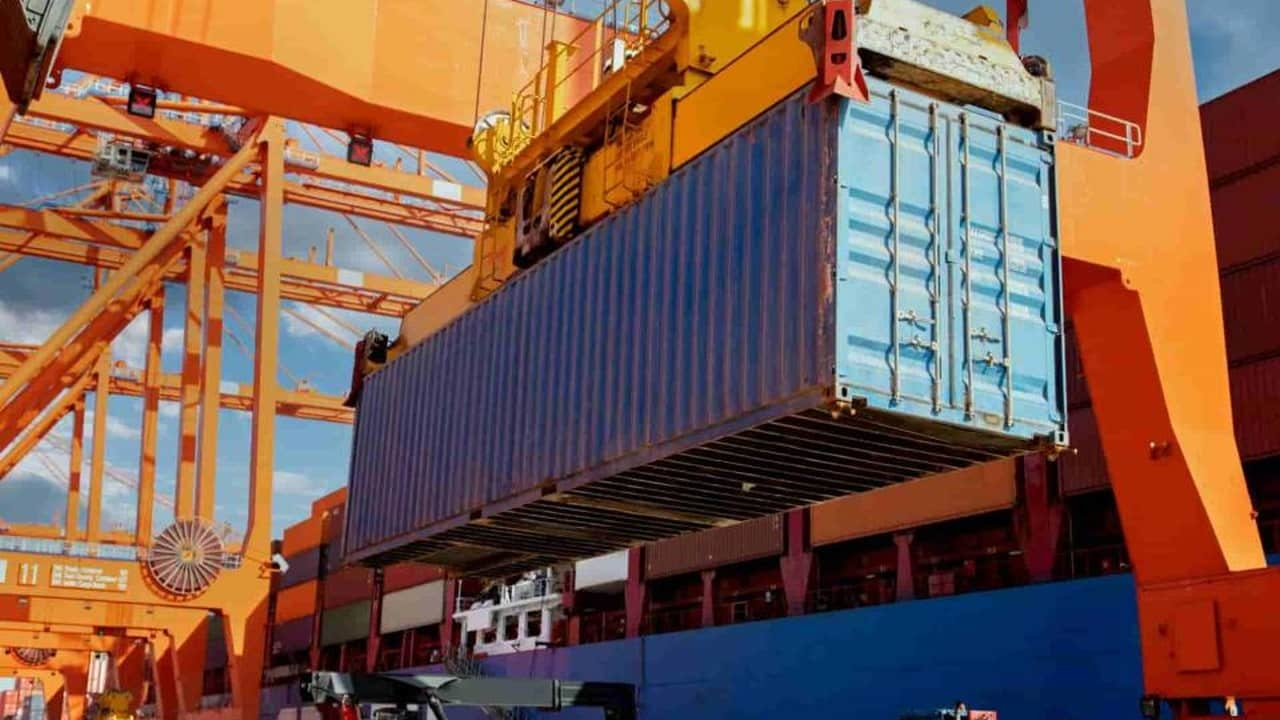
Bogotá has no seaport, yet cargo destined for the capital can enter through Cartagena on the Caribbean or Buenaventura on the Pacific. From either coast, it continues inland toward markets shaped by the Andes. That journey is essential to understanding ports in Colombia. This guide profiles 30 selected port locations and terminals, showing what each handles, which regions it connects, and how navigation conditions can affect a shipment.

CONTECAR Terminal, Cartagena (COCNR)
Address: Vía Mamonal Km 1, Albornoz, Cartagena de Indias, Bolívar 130013, Colombia.
Cartagena’s largest individual container terminal also works as a transfer point between international shipping services.
- Annual TEU: 2,665,690 TEU (2025).
- Main functions: Containers, transshipment, refrigerated cargo, Ro-Ro vehicles, general cargo, and selected bulk operations.
- Vessel access: The 2026 technical profile records a 15.7 m operating draft and 1,000 m of quay.
- Public terminal operator: Terminal de Contenedores de Cartagena S.A. (CONTECAR), part of Grupo Puerto de Cartagena.
- Route context: The group’s international network spans multiple countries; a network connection does not always mean a direct sailing.
Sociedad Portuaria Regional de Cartagena, Manga (COCTG)
Address: Manga Terminal Marítimo, Cartagena de Indias, Bolívar 130001, Colombia.
At Manga, container handling shares the waterfront with general cargo and passenger activity, giving it a different role from CONTECAR.
- Annual TEU: 1,185,078 TEU (2025).
- Main imports: Household goods, polyethylene and other plastics, and food products in the terminal’s 2025 records.
- Main exports: Household goods, plastics, fruit, and vegetables in the terminal’s 2025 records.
- Recorded trade countries: Imports included the United States, China, and Brazil; exports included Brazil, the United States, and Jamaica.
- Vessel access: The 2026 profile lists a 14.7 m operating draft; this is a terminal specification, not live clearance.
- Public terminal operator: Sociedad Portuaria Regional de Cartagena S.A. (SPRC).
Puerto Industrial Aguadulce, Buenaventura (COBUN)
Location: Península de Aguadulce, Buenaventura, Valle del Cauca, Colombia.
Across Buenaventura Bay, Aguadulce combines a modern container terminal with space for bulk and project cargo.
- Annual TEU: 646,209 TEU (2025).
- Main functions: Containers, general and project cargo, bulk goods, and Ro-Ro vehicle handling.
- Vessel access: The official profile records a 14 m operating draft and a 900 m quay.
- Truck operations: The operator uses appointments and has published night pickup windows for cargo collection.
- Public terminal operator: Sociedad Puerto Industrial Aguadulce S.A.
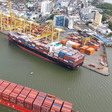
Sociedad Portuaria Regional de Buenaventura (COBUN)
Address: Avenida Portuaria, Edificio Administración, Buenaventura, Valle del Cauca, Colombia.
This established Pacific terminal receives a mix of containerized imports and agricultural exports linked to Colombia’s inland markets.
- Annual TEU: 634,267 TEU (2025).
- Main imports: Chemicals, cereals and grains, and food products in the terminal’s 2025 records.
- Main exports: Sugar, coffee, and packaging products in the terminal’s 2025 records.
- Recorded import countries: United States, China, and Peru were leading origins in the terminal’s 2025 figures.
- Port access: Heavy Pacific rain, tides, swell, and channel conditions can affect anchorage or vessel movements.
- Public terminal operator: Sociedad Portuaria Regional de Buenaventura S.A. (SPRBUN).

TCBUEN / APM Terminals Buenaventura (COBUN)
Address: Carrera 28A No. 7-152, Vía Alterna Interna, Buenaventura, Valle del Cauca 764502, Colombia.
TCBUEN adds a container-focused facility to Buenaventura, with storage that also supports temperature-sensitive cargo.
- Annual TEU: 419,887 TEU (2025).
- Main functions: Container handling, refrigerated-container support, specialized storage, and general cargo services.
- Cargo examples: Its 2026 operations notice identifies coffee, sugar, and breakbulk warehouse handling.
- Port access: Carrier schedules should account for Buenaventura’s weather, tides, channel works, and inland truck movements.
- Public terminal operator: Terminal de Contenedores de Buenaventura S.A., operated within APM Terminals’ network.
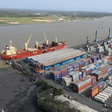
Port of Barranquilla / SPRB (COBAQ)
Address: Carrera 38 con Calle 1a, Orilla del Río Magdalena, Barranquilla, Atlántico, Colombia.
The Magdalena River gives Barranquilla a maritime entrance and a river connection, while sediment makes channel depth a moving variable.
- Annual TEU: 168,742 TEU (2025).
- Main imports: Cereals and grains, clinker, and industrial parts in the terminal’s 2025 records.
- Main exports: Coal and coke, industrial parts, ores, and scrap in the terminal’s 2025 records.
- Recorded import countries: United States, China, and Algeria were leading origins in 2025.
- Port access: DIMAR monitors the lower river channel because flow and sediment can change permitted vessel draft.
- Public terminal operator: Sociedad Portuaria Regional de Barranquilla S.A.; Cormagdalena grants its concession.
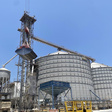
COMPAS Cartagena (COCTG)
Address: Avenida Pedro Vélez No. 48-14, Barrio El Bosque, Cartagena de Indias, Bolívar, Colombia.
COMPAS Cartagena shows another side of the same bay: containers share terminal space with general and bulk cargo.
- Annual TEU: 164,580 TEU (2025).
- Main functions: Containerized cargo, general cargo, and dry-bulk handling.
- Vessel access: The 2026 profile records a 12 m operating draft and a 630 m marginal quay.
- Terminal identity: This is COMPAS’s Cartagena facility, distinct from its sites in Barranquilla, Buenaventura, and Tolú.
- Public terminal operator: Compañía de Puertos Asociados S.A. (COMPAS).
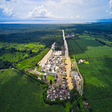
Unibán Servicios / Zungo, Urabá (COTRB)
Location: Carepa, Antioquia, Colombia; reported under the Turbo/Urabá port zone.
The banana supply chain explains why this Urabá facility matters more than its position in a national TEU ranking alone.
- Annual TEU: 162,771 TEU (2025).
- Main exports: Bananas and other refrigerated agricultural cargo associated with the Urabá region.
- Main function: River-linked cargo collection and refrigerated export logistics.
- Local connection: The facility sits in Carepa, while national port statistics aggregate it under Turbo.
- Public terminal operator: Unión de Bananeros de Urabá S.A. (Unibán).
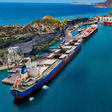
Port of Santa Marta / Regional Port Society (COSMR)
Address: Carrera 1 No. 10A-12, Santa Marta, Magdalena, Colombia.
Santa Marta’s mixed cargo profile joins containers and food imports with coal and other exports from nearby producing regions.
- Annual TEU: 127,953 TEU (2025).
- Main imports: Maize, soybeans, and wheat led the regional terminal’s 2025 records.
- Main exports: Packaging, coal, and vegetable oils appear in the terminal’s reported export mix.
- Berth-specific draft: Its seven berths range from 7.67 m to 17.04 m operating draft in the 2026 profile.
- Port-zone hinterland: Cesar led total export weight; Magdalena led non-mineral, non-energy exports in 2025.
- Public terminal operator: Sociedad Portuaria Regional de Santa Marta S.A.
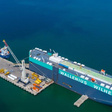
Puerto Bahía, Cartagena (COCTG)
Location: Barú, Cartagena de Indias, Bolívar, Colombia.
Its container figure is modest beside Cartagena’s major box terminals because Puerto Bahía also serves industrial and energy cargo.
- Annual TEU: 23,033 TEU (2025).
- Main functions: Liquid hydrocarbons, general cargo, dry bulk, and Ro-Ro traffic.
- Terminal role: It serves the wider Cartagena industrial port zone rather than operating only as a container yard.
- Public terminal operator: Sociedad Portuaria Puerto Bahía S.A.
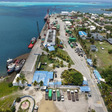
San Andrés Port Society, San Andrés Island
Location: San Andrés Island, Archipelago of San Andrés, Providencia and Santa Catalina, Colombia.
For an island, the port’s importance lies in regular supply and local access, not in competing with mainland export hubs.
- Annual TEU: 18,020 TEU (2025).
- Main function: Receiving containerized and general supplies for San Andrés Island.
- Vessel access: The 2026 profile lists a 5.18 m channel depth, suited to its smaller-vessel context.
- Public terminal operator: San Andrés Port Society S.A.; the departmental government is the concession authority.
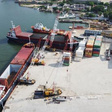
TRANSMARSYP, Cartagena (COCTG)
Location: Cartagena de Indias, Bolívar, Colombia.
This Cartagena terminal serves the San Andrés, Providencia, and Santa Catalina islands through coastal shipping and island-supply cargo.
- Annual TEU: 6,444 TEU (2025).
- Main functions: Containers, general cargo, bulk goods, refrigerated cargo, and regulated dangerous goods.
- Island supply: Food, construction materials, machinery, and gas in isotanks are among the cargoes identified by ANI.
- Route served: Cartagena to the San Andrés, Providencia, and Santa Catalina archipelago by coastal shipping.
- Vessel access: The 2026 profile records a 4.87 m operating draft and an 80 m marginal quay.
- Public terminal operator: Sociedad Portuaria Transportes Marítima San Andrés y Providencia S.A. (TRANSMARSYP).
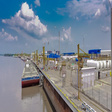
Impala Barrancabermeja (COEJA)
Location: Barrancabermeja, Santander, Colombia.
This inland Magdalena River hub brings port logistics closer to industrial cargo than an oceanfront terminal can.
- Annual TEU: 2,433 TEU (2025).
- Main functions: River cargo transfer, general cargo, coal, and liquid and dry bulk.
- Barge access: The 2026 profile lists a 1.83 m operating draft for its river facilities.
- Public terminal operator: Sociedad Portuaria Impala Barrancabermeja S.A.; Cormagdalena grants its concession.
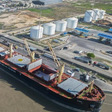
Palermo Port, Barranquilla Zone
Location: Sitionuevo, Magdalena, Colombia, across the Magdalena River from Barranquilla.
Palermo illustrates a geographic wrinkle: a terminal counted in the Barranquilla port zone can sit in another department.
- Annual TEU: 1,275 TEU (2025).
- Main functions: Multipurpose river-mouth cargo handling and industrial logistics.
- Quay and draft: Its 2026 profile records a 965 m quay and a 12 m operating draft.
- Public terminal operator: Palermo Sociedad Portuaria S.A.
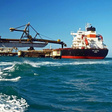
Puerto Bolívar / Cerrejón, La Guajira
Location: Puerto Bolívar, Uribia, La Guajira, Colombia.
The mine-to-port railway makes this a coal-export system; its incidental container count barely describes the operation.
- Annual TEU: 631 TEU (2025).
- Main export: Coal from the Cerrejón mining complex.
- Dedicated connection: A railway of approximately 150 km links the mine with Puerto Bolívar.
- Vessel access: The 2026 technical profile lists a 17.2 m operating draft.
- Private terminal operator: Sociedad Portuaria Cerrejón Zona Norte S.A.
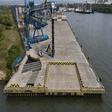
Puerto de Mamonal, Cartagena (COCTG)
Location: Mamonal industrial zone, Cartagena de Indias, Bolívar, Colombia.
Its low container count sits alongside a broader cargo range, including unusually large freight and Ro-Ro operations.
- Annual TEU: 192 TEU (2025).
- Main functions: General and bulk cargo, containers, oversized cargo, live animals, and hydrocarbons.
- Vessel access: Its two-channel technical profile reports operating draft up to 14.2 m on the north channel.
- Public terminal operator: Sociedad Portuaria Puerto de Mamonal S.A.
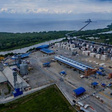
Puerto Antioquia, Urabá (COTRB)
Location: Bahía Colombia, Nueva Colonia, Turbo, Antioquia, Colombia.
Puerto Antioquia changes Urabá’s port story in 2026: it is a new multipurpose terminal, separate from older banana facilities.
- Annual TEU: N/A; the terminal began receiving export cargo in February 2026.
- Main functions: Containers, general cargo, and solid and liquid bulk.
- Agricultural link: Its first export programme included Colombian bananas destined for Europe.
- Vessel access: The profile records an 18 m channel; operating draft varies by berth from 12 m to 16.3 m.
- Public terminal operator: Sociedad Portuaria Puerto Bahía Colombia de Urabá S.A.
COMPAS Buenaventura (COBUN)
Location: Avenida Boyacá, Zona Portuaria, Buenaventura, Valle del Cauca, Colombia.
This COMPAS site serves general and non-coal bulk cargo on the Pacific coast, distinct from Buenaventura’s major container terminals.
- Annual TEU: N/A.
- Main functions: General cargo and non-coal dry-bulk handling.
- Vessel access: The 2026 profile records a 10.5 m operating draft and a 120 m wharf.
- Public terminal operator: Compañía de Puertos Asociados S.A. (COMPAS).
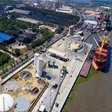
COMPAS Barranquilla (COBAQ)
Location: Vía 40, sector Las Flores, Barranquilla, Atlántico, Colombia.
At the Magdalena River mouth, COMPAS operates a mixed-cargo facility whose activity cannot be reduced to container throughput.
- Annual TEU: N/A in the 2025 comparison; a separate first-half 2026 report recorded 98 TEU.
- Main functions: General cargo, dry and liquid bulk, coal, and containers.
- Port access: Lower-Magdalena sediment and changing river flow require current channel guidance for vessel planning.
- Private terminal operator: Compañía de Puertos Asociados S.A. (COMPAS).
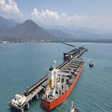
Puerto Drummond, Ciénaga
Address: Km 10, Vía Nacional Ciénaga–Santa Marta, Ciénaga, Magdalena, Colombia.
Coal arrives by a dedicated supply chain and is loaded for export at this deep-water Ciénaga terminal.
- Annual TEU: N/A; coal tonnage is the relevant measure here.
- Main export: Coal; the terminal reported approximately 25.1 million tonnes handled in 2025.
- Vessel access: Its 2026 profile records about 20.5 m operating draft and a 744 m pier.
- Private terminal operator: American Port Company Inc. / Puerto Drummond.
Puerto Nuevo, Ciénaga
Location: Ciénaga, Magdalena, Colombia.
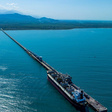
Puerto Nuevo is another coal outlet in the Ciénaga zone, with its own figures and infrastructure separate from Drummond.
- Annual TEU: N/A.
- Main export: Coal; the terminal reported approximately 2.54 million tonnes handled in 2025.
- Vessel access: Its 2026 profile lists an 18.4 m operating draft and a 347 m pier.
- Public terminal operator: Sociedad Portuaria Puerto Nuevo S.A.
Puerto Brisa, La Guajira (CORCH)
Location: Riohacha, La Guajira, Colombia.
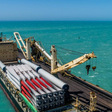
The long pier and deep access channel distinguish this La Guajira facility from nearby shallow coastal landings.
- Annual TEU: N/A.
- Main cargo: Coal, according to the 2026 technical profile.
- Infrastructure: The profile lists a 17.5 m access channel and a 380 m pier.
- Public terminal operator: Sociedad Puerto Brisa S.A.
CENIT Coveñas (COCVE)
Location: Coveñas, Sucre, Colombia.
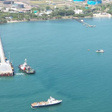
In the Gulf of Morrosquillo, this petroleum facility illustrates why a high-tonnage export area can have no comparable TEU figure.
- Annual TEU: N/A.
- Main cargo: Crude oil and other liquid hydrocarbons; the CENIT facility handled about 8.7 million tonnes in 2025.
- Vessel access: Its 2026 profile reports berth-specific draft; TLU-1 is listed at 17.07 m.
- Private terminal operator: Cenit Transporte y Logística de Hidrocarburos S.A.S.
OCENSA Marine Terminal, Morrosquillo
Location: San Antero, Córdoba, Colombia, within the Gulf of Morrosquillo port zone.
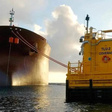
OCENSA is another crude-oil facility in the same gulf, but it has a separate operator and berth characteristics.
- Annual TEU: N/A.
- Main cargo: Crude oil received through petroleum infrastructure rather than a conventional container yard.
- Vessel access: The 2026 technical profile reports a 22 m operating draft.
- Public terminal operator: Sociedad Portuaria Oleoducto Central S.A. (OCENSA).
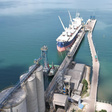
COMPAS Tolú (COTLU)
Address: K 11 No. 1F-175 Int., Santiago de Tolú, Sucre, Colombia.
COMPAS Tolú has a liquid-bulk role, unlike the company’s mixed-cargo terminals in Cartagena and Barranquilla.
- Annual TEU: N/A.
- Main function: Liquid-bulk cargo handling.
- Vessel access: Its 2026 profile records a 12.5 m operating draft.
- Public terminal operator: Compañía de Puertos Asociados S.A. (COMPAS).
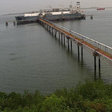
SPEC / El Cayao LNG Terminal, Cartagena (COCTG)
Location: Cartagena de Indias, Bolívar, Colombia.
This facility exists to receive liquefied natural gas, adding an energy-import function to Cartagena’s diverse port zone.
- Annual TEU: N/A.
- Main import: Liquefied natural gas (LNG).
- Infrastructure: The 2026 profile lists a 705 m jetty and a 22 m channel depth.
- Public terminal operator: Sociedad Portuaria El Cayao S.A. E.S.P. (SPEC).
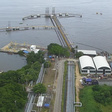
Ecopetrol Cartagena Marine Terminal (COCTG)
Location: Cartagena de Indias, Bolívar, Colombia.
The Ecopetrol marine facility handles hydrocarbon flows within Cartagena’s industrial system, separate from the city’s container terminals.
- Annual TEU: N/A.
- Main function: Liquid-hydrocarbon bulk handling for petroleum logistics.
- Vessel access: The 2026 technical profile records a 13 m operating draft.
- Private terminal operator: Sociedad Portuaria Ecopetrol S.A.

OTAMERICA Cartagena (COCTG)
Location: Cartagena de Indias, Bolívar, Colombia.
Chemical and petroleum products explain this terminal’s role in Cartagena’s industrial waterfront rather than its container ranking.
- Annual TEU: N/A.
- Main cargo: Chemicals, hydrocarbons, and related liquid products.
- Vessel access: Its 2026 technical profile records a 12.5 m operating draft.
- Public terminal operator: Sociedad Portuaria OTAMERICA Colombia S.A., formerly named Oiltanking Colombia.

Tumaco Pacific Port (COTCO)
Location: Tumaco, Nariño, Colombia.
Tumaco’s shallow access gives this southern Pacific facility a regional role different from Buenaventura’s deep-water container terminals.
- Annual TEU: N/A.
- Main functions: General cargo, containers, and solid and liquid bulk for the southern Pacific coast.
- Channel condition: The 2026 technical profile lists a 2.5 m channel; vessel suitability requires current confirmation.
- Port-zone cargo origins: Putumayo supplied 94% of Tumaco’s reported export weight in 2025.
- Public terminal operator: Sociedad Portuaria Regional Tumaco Pacific Port S.A.
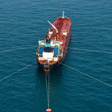
CENIT Tumaco (COTCO)
Location: Tumaco, Nariño, Colombia.
An offshore mooring gives CENIT’s petroleum terminal a different vessel profile from the shallow Tumaco Pacific Port facility.
- Annual TEU: N/A.
- Main function: Liquid-hydrocarbon handling through an offshore multibuoy mooring.
- Vessel access: The 2026 technical profile lists a 19 m operating draft for the offshore facility.
- Private terminal operator: Cenit Transporte y Logística de Hidrocarburos S.A.S.