When shipping goods from China to Latin America, choosing the right container size helps you estimate loading capacity, shipping costs, and transportation requirements. Working with an experienced ocean freight forwarder from China can help you select the most suitable shipping option, avoid unnecessary freight costs, maximize container utilization, and prepare an efficient loading plan before shipment.
What Does a 20ft Shipping Container Mean in Shipping?
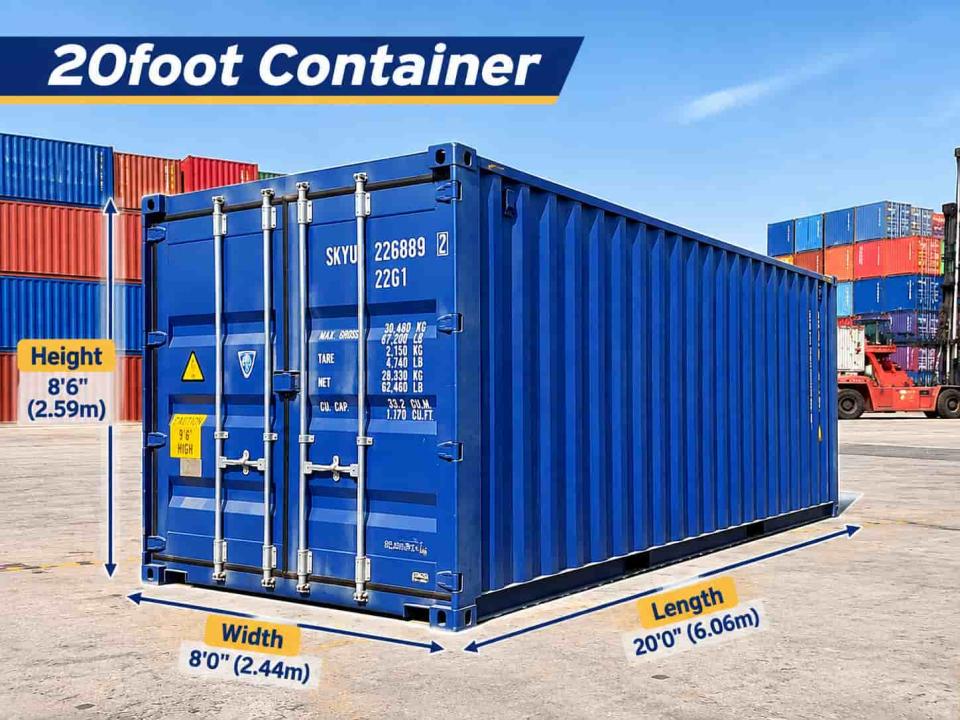
A 20-foot container is a standardized shipping container with a length of 20 feet (approximately 6 meters) under ISO international container standards. It is widely used for general cargo transportation in international trade. TEU (Twenty-foot Equivalent Unit) is the standard measurement unit for container capacity and volume in the global shipping industry.
Before choosing a 20-foot container for your shipment, you should first confirm your cargo details, including cargo volume, weight, and dimensions. These factors directly affect the most suitable shipping method. A reliable freight forwarder can help you determine the most cost-effective shipping option among LCL shipping, 20-foot shipping containers, and 40-foot shipping containers.
Why Is the 20ft Shipping Container Popular for Global Shipping?
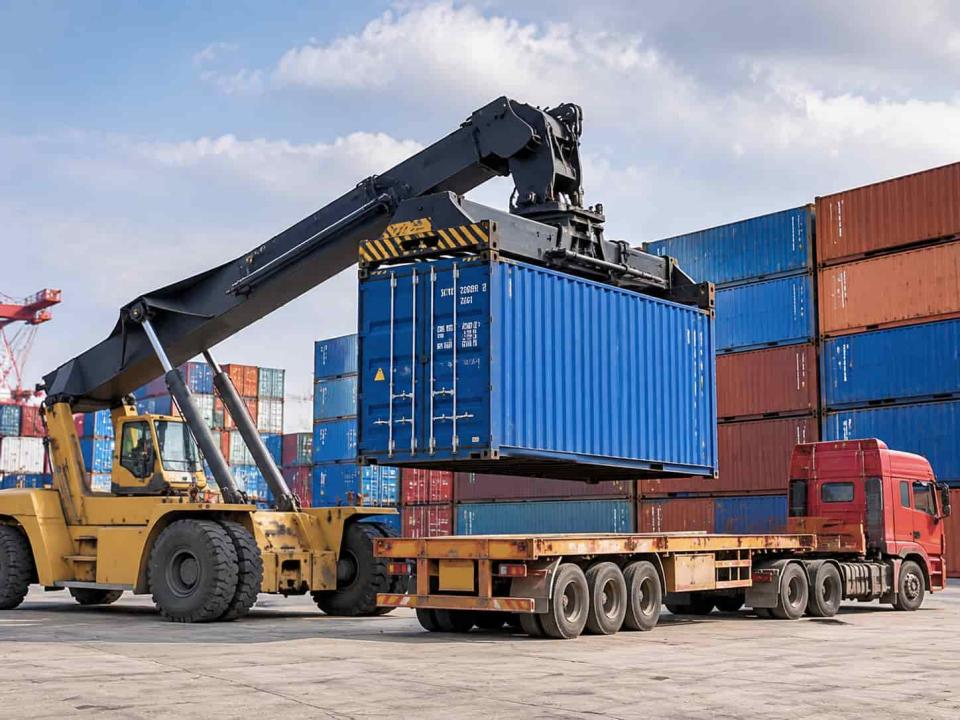
Widely Accepted at Global Ports
20-foot containers are accepted and handled by almost all international ports, making them one of the most commonly used container types worldwide.
Strong Loading Capacity
Compared with 40ft containers, 20ft containers are a more suitable option for heavy cargo, including metal products, machinery, industrial parts, and hardware products.
Flexible and Easier to Arrange
During periods of port congestion or inland transportation limitations, 20ft shipping containers provide greater flexibility in arrangement and faster container turnover.
Suitable for Small and Medium-Sized Importers
For importers with cargo volumes around 15-30 CBM, a 20-foot container is usually the most practical choice.
Lower Freight and Handling Costs
The shipping costs and port handling costs are generally lower than those of a 40ft container.
Higher Cargo Security
Your cargo does not need to share container space with other exporters, reducing handling risks during transportation.
Easier Inland Delivery
20ft containers offer flexibility for inland transportation due to their compact size, with easier access to inland delivery locations.
lexible Loading Options
A 20ft container provides flexible loading capacity for palletized cargo and carton-packed goods.
Types of 20ft Shipping Containers
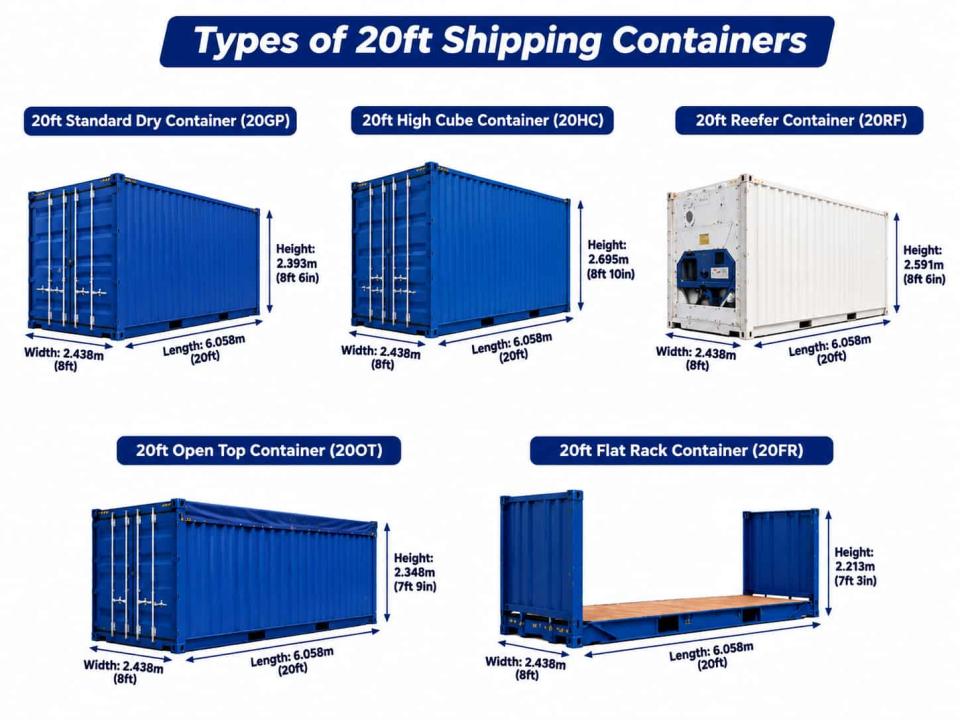
Standard 20ft Dry Container
Internal Dimensions: 5.898m × 2.352m × 2.393m
Volume: Approx. 33.2 CBM
Maximum Gross Weight: 30,480 kg
Tare Weight: 2,150-2,300 kg
Suitable Cargo: Daily goods, electronic products, textiles, machinery parts, hardware tools, toys, shoes, bagged food products, and chemical products in drums.
If your cargo does not require temperature control and does not have oversized dimensions, a standard 20GP container is usually the most cost-effective option.
20ft High Cube Container
Internal Height: Approx. 2.69m (0.3m higher than a standard container)
Volume: Approx. 37 CBM (around 4 CBM more than a standard container)
Suitable Cargo: Large-volume and lightweight cargo, also known as “volumetric cargo”, including:
- Clothing
- Shoes
- Plastic products
- Sponge products
- Pillows
- Toys
Before choosing a 20ft High Cube container, it is important to confirm whether there are height restrictions for inland transportation at the destination.
20ft Reefer Container
Volume: Approx. 28.2-28.3 CBM (reduced space due to the refrigeration unit)
Temperature Range: Usually -30°C to +30°C
Suitable Cargo:
- Fresh food
- Meat
- Seafood
- Fruits
- Vegetables
- Medicines and vaccines
- Flowers
- Chocolate
- Wine
Important Notes for Refrigerated Cargo Shipping:
- Book 2-3 weeks in advance
- Pre-cool the container and cargo at the same time
- Use temperature monitoring devices
- Prepare correct customs clearance documents
20ft Open Top Container
The top of an open top container can be opened or completely removed, allowing cargo to be loaded from the top.
Suitable Cargo:
- Cargo exceeding the standard door height of 2.28m
- Heavy equipment that cannot be loaded through the container door
- Cargo requiring crane loading from the top
- Long pipes and steel beams
Compared with standard 20ft containers, open-top containers incur higher costs and are less suitable for rain-sensitive cargo. Despite the waterproof tarpaulin cover, the overall weather protection remains lower than that of fully enclosed containers.
20ft Flat Rack Container
A flat rack container has no roof or side walls. It only consists of a base platform and foldable end walls.
Suitable Cargo:
- Heavy machinery and industrial equipment
- Extra-wide cargo (over 2.35m)
- Extra-long cargo (with foldable end walls)
- Yachts
- Large steel structures
- Wind power equipment components
When using a flat rack container, the shipper is responsible for securing and lashing the cargo to ensure it does not move during ocean transportation.
Comparison of 20ft Shipping Container Types (2026 Updated)
| Container Type | Internal Dimensions (L × W × H) | External Dimensions (L × W × H) | Door Opening (W × H) | Maximum Gross Weight | Maximum Payload | Maximum Volume |
| 20ft Standard Dry Container (20GP) | 5,898 × 2,350 × 2,390 mm | 6,058 × 2,438 × 2,591 mm | 2,340 × 2,280 mm | 30,480 kg | Approx. 28,200 kg | 33.1 CBM |
| 20ft High Cube Container (20HC) | 5,898 × 2,350 × 2,695 mm | 6,058 × 2,438 × 2,896 mm | 2,340 × 2,585 mm | 30,480 kg | Approx. 28,000 kg | 37.4 CBM |
| 20ft Reefer Container (20RF) | 5,456 × 2,288 × 2,263 mm | 6,058 × 2,438 × 2,591 mm | 2,290 × 2,221 mm | 30,480 kg | Approx. 27,400 kg | 28.2 CBM |
| 20ft Open Top Container (20OT) | 5,898 × 2,352 × 2,348 mm | 6,058 × 2,438 × 2,591 mm | 2,340 × 2,280 mm | 30,480 kg | Approx. 28,100 kg | 32.5 CBM |
| 20ft Flat Rack Container (20FR) | 5,650 × 2,438 × 2,213 mm | 6,058 × 2,438 × 2,591 mm | – | 30,480 kg | Approx. 27,500 kg | – |
How Much Can Fit Inside a 20ft Shipping Container?
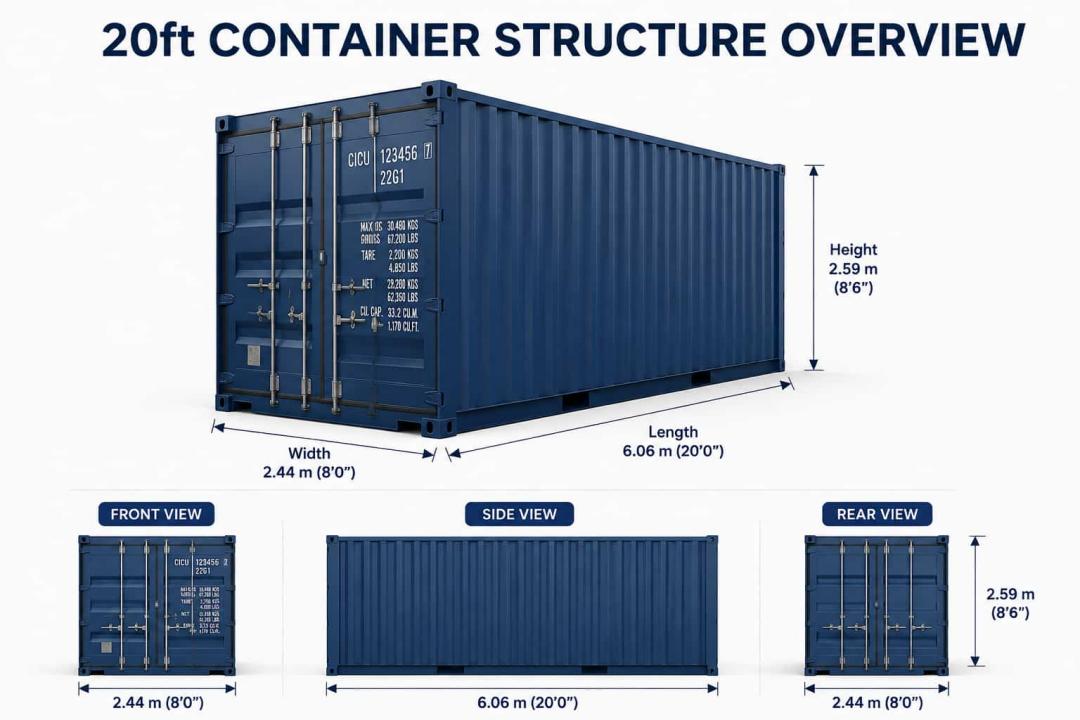
20-foot Container External Dimensions
- External Length: 19 feet 10.5 in (6.058 m)
- External Width: 8 feet (2.438 m)
- External Height: 8 feet 6 in (2.591 m)
Before loading your container, providing your freight forwarder with product package dimensions, carton quantity, and unit weight allows an efficient loading plan to be prepared in advance.
20-foot Container Internal Dimensions
- Internal Length: 19 feet 4 in (5.898 m)
- Internal Width: 7 feet 8.5 in (2.352 m)
- Internal Height: 7 feet 10.2 in (2.393 m)
For your furniture, machinery, or oversized equipment shipments, advance cargo arrangement and weight distribution planning can help maximize space utilization.
20-foot Container Door Opening Dimensions
- Door Width: 7 feet 8 in (2.340 m)
- Door Height: 7 feet 5.75 in (2.280 m)
The container door dimensions determine whether your cargo can be loaded directly into the container. Therefore, your cargo packaging dimensions should be carefully considered, with at least 3–5 cm of clearance
How Many Cubic Meters Fit in a 20ft Container?
The theoretical capacity of a standard 20ft container is:5.898 × 2.352 × 2.393 ≈ 33.2 CBM
Although you may expect a 20ft container to hold approximately 33 CBM of cargo, the actual loading volume is usually lower due to several practical factors:
- Gaps between stacked cargo
- Non-compressible packaging materials
- Space reserved to prevent cargo damage
Before container loading, a detailed loading plan based on your cargo dimensions and approximately 10% buffer space reservation is essential, rather than simply dividing your total cargo volume by 33 CBM.
Empty Container Weight (Tare Weight)
The empty weight of a 20ft container is approximately 2.2 MT-2.3 MT. The lighter the empty container weight, the more cargo weight you can load inside.
Maximum Payload
A 20ft container can generally carry approximately 28 MT of cargo.
However, different shipping lines and routes may have stricter weight restrictions. Before booking, confirming the applicable weight limit with your freight forwarder can help you avoid potential loading issues.
Maximum Gross Weight
Maximum Gross Weight = Empty Container Weight + Cargo Weight
Before loading your container, ensuring that your cargo complies with container weight limits can help you avoid overweight penalties and loading delays.
How Many Pallets Can You Load in a 20ft Container from China?
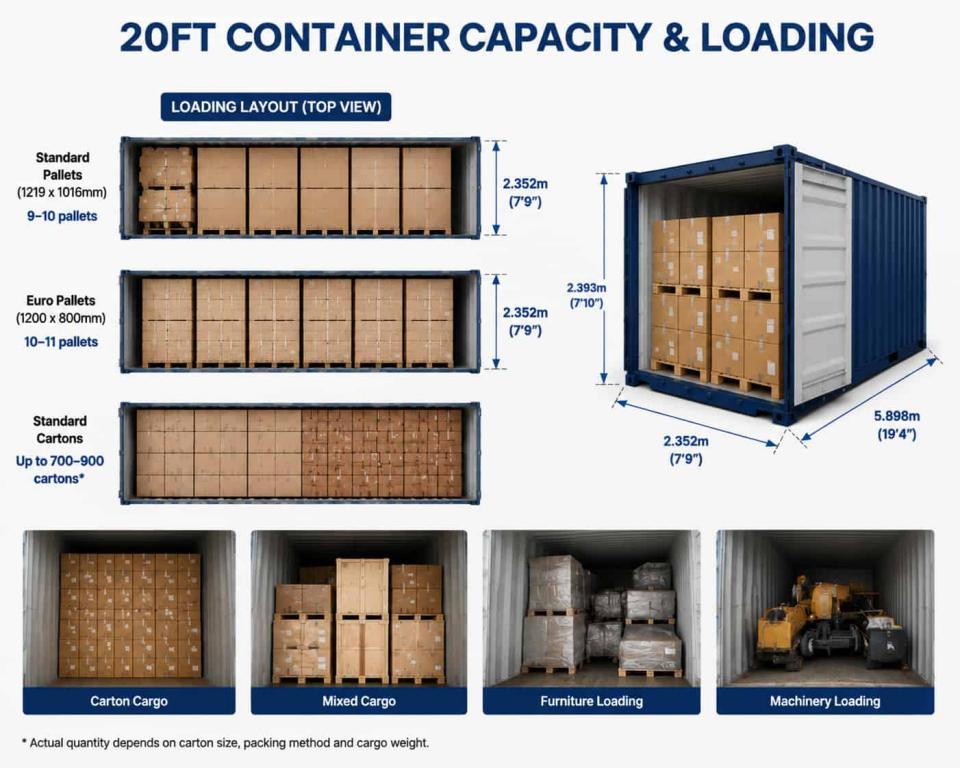
Pallet sizes vary by country and region. You can refer to the table below to understand common pallet specifications.
| Pallet Type | Dimensions (mm) | Loading Capacity | Main Usage Areas |
| Euro Pallet (EUR1) | 1200 × 800 | 10-11 pallets | Europe, Southeast Asia |
| Industrial Standard Pallet | 1200 × 1000 | Around 10 pallets | Asia, Australia |
| American Standard Pallet (GMA) | 1219 × 1016 | 10-11 pallets | North America |
How Many Euro Pallets Fit in a 20ft Container?
- Standard arrangement (all pallets facing the same direction): 10 pallets
- Optimized arrangement (alternating rotation): 11 pallets
- Double stacking (if cargo can withstand the weight): 22 pallets
Normally, around 11 Euro pallets can fit inside a 20ft container. However, the actual quantity depends on pallet weight, height, and whether double stacking is allowed.
How Many Standard Pallets Fit in a 20ft Container?
A 20ft container can fit approximately 9-10 standard pallets.
Standard American pallet size:48 × 40 inches
You should consider container dimensions and pallet specifications during the production and packaging stage to prepare for efficient container loading.
How Many Cartons Fit in a 20ft Container?
The number of cartons depends on the volume of each carton.
Once you know your carton dimensions, you can easily estimate the loading quantity using the following formula:
Carton Quantity ≈ 28-30 (actual usable CBM) ÷ Single Carton Volume (CBM)
Estimated Carton Loading Capacity in a 20ft Shipping Container
| Carton Size (cm) | Single Carton Volume (CBM) | Estimated Carton Quantity in 20ft Container |
| 50 × 40 × 30 | 0.06 | Approx. 460-500 cartons |
| 60 × 50 × 40 | 0.12 | Approx. 230-250 cartons |
| 45 × 35 × 25 | 0.039 | Approx. 700-770 cartons |
How Do I Choose Between a 20ft Container and a 40ft Container?
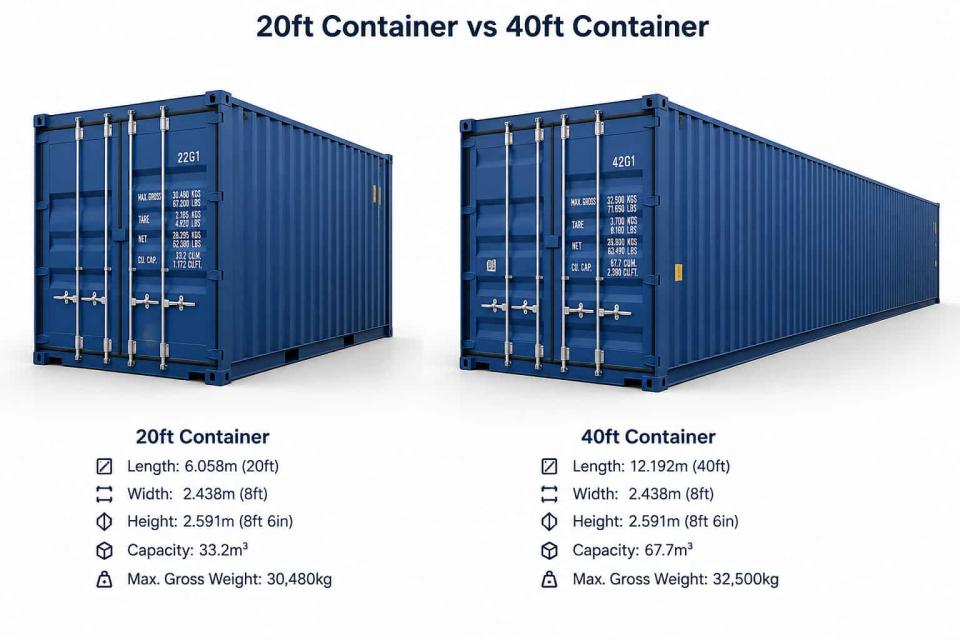
The choice between a 20ft and 40ft container mainly depends on your cargo volume, cargo weight, and product characteristics. Choosing the right container size helps you optimize shipping costs, improve loading efficiency, and avoid unnecessary transportation expenses.
20ft Container vs 40ft Container: Main Differences
The main difference between a 20ft and 40ft container is the available loading volume. A 40ft container provides almost double the capacity of a 20ft container, while both containers have similar maximum gross weight limits. A 20ft container is more suitable for heavy and dense cargo because the cargo weight usually reaches the container limit before the available space is fully used. A 40ft container is more suitable for large-volume and lightweight cargo because it provides more loading space and better volume efficiency.
Choose a 20ft Container When You Ship
Heavy Cargo: Machinery parts, metal products, industrial equipment, hardware products.
Dense Goods: A 20-foot container is usually more suitable when cargo weight reaches the container limit before the available space is fully used.
Small to Medium Volume Shipments: For cargo around 15-30 CBM, a 20ft container is often a practical choice.
Choose a 20ft Container When You Ship
Large Volume Cargo: Furniture, Textiles, Consumer goods, Lightweight products
High-Volume but Low-Weight Cargo: A 40ft container provides almost double the volume of a 20ft container, making it more cost-effective for lightweight cargo with large volume.
20ft vs 40ft Container Quick Comparison
| Comparison | 20ft Container | 40ft Container |
| Volume | Approx. 33 CBM | Approx. 67 CBM |
| Payload | Approx. 28 MT | Approx. 26-28 MT |
| Best For | Heavy cargo, dense goods | Large-volume, lightweight cargo |
| Floor Space | Approx. 13.9 m² | Approx. 28.3 m² |
| Shipping Cost | Lower total cost | Higher total cost but lower cost per CBM |
20-foot Container Shipping vs LCL Shipping
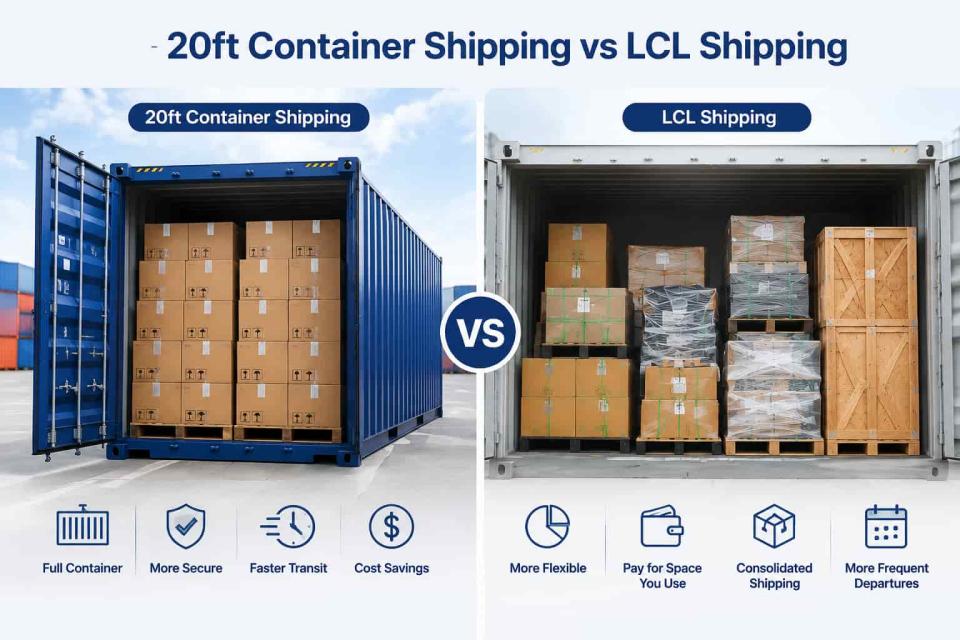
A 20-foot container provides a dedicated container for your shipment, while LCL (Less than Container Load) shipping allows you to share container space with other exporters and pay based on the cargo volume you use.
You can use the following table to decide whether a 20ft container (FCL) or LCL shipping is more suitable for your shipment.
| Comparison | 20ft Container (FCL) | LCL Shipping |
| Cost | Fixed container rate | Charged by CBM |
| Cargo Volume | Suitable for 15+ CBM | Less than 15 CBM |
| Cargo Safety | Higher, less handling | Lower, more handling |
| Transit Time | Usually faster | Longer due to consolidation and warehouse handling |
| Flexibility | Better for regular and larger shipments | Better for small shipments with limited cargo volume |
20-foot Container Shipping vs LCL Shipping: Quick Recommendation
- Below 15 CBM: LCL shipping is usually more cost-effective
- Around 15-30 CBM: A 20ft container is often the better option
- Above 30 CBM: You may need to consider a 40ft container or other container solutions
However, the best option also depends on your cargo weight, product type, destination charges, and final delivery requirements.
Frequently Asked Questions About 20ft Shipping Containers
What Is the Difference Between 20-foot FCL and LCL Shipping?
A 20ft FCL container means your cargo uses the entire container
If your cargo volume is below 15 CBM, you can consider LCL shipping. When your cargo volume reaches around 15 CBM, choosing a 20ft container can often be more cost-effective than LCL shipping.
How Long Does It Take to Ship a 20ft Container from China?
Shipping from China to Latin America usually takes around 25-45 days by sea, depending on the destination port and service route.
What Documents Are Required to Ship a 20ft Container from China?
The common documents required for a 20ft container shipment include:
- Commercial Invoice
- Packing List
- Bill of Lading
- Export Customs Declaration
- Certificate of Origin (if required)
- Product-specific certificates (for regulated goods)
The exact requirements depend on the cargo type and destination country.
Can a 20ft Shipping Container Be Delivered Door-to-Door?
Yes, we provide 20ft container door-to-door delivery from the destination port to your warehouse or designated address. You do not need to spend time coordinating with different trucking providers or handling complex delivery arrangements. Our team coordinates inland transportation, container pickup, and final delivery to help you receive your cargo safely and efficiently.
Can Furniture Fit Inside a 20ft Shipping Container?
Yes, you can use a 20ft container to transport furniture.
A 20ft container can hold approximately 80-120 sets of small table and chair packages. For complete residential furniture transportation, a 40HQ container is usually required.
Can a Car Fit Inside a 20ft Container?
Yes. A standard-sized car can fit inside a 20ft container.
Vehicles that can fit:
- Most sedans
- Small SUVs
- Sports cars
- Convertibles
Vehicles that may not fit:
- Large pickup trucks (such as Ford F-150, with a length exceeding 5.8m)
- Full-size SUVs (height exceeding 2.39m or exceeding length limits)
- Limousines
When using a 20-foot container to ship vehicles, you need:
- Professional securing equipment
- Anti-movement protection measures
- Correct customs clearance documents
How Much Does It Cost to Ship a 20-foot Container from China to Latin America?
The cost of shipping a 20ft container from China to Latin America depends on several factors, including the departure port, destination country, shipping route, container type, and market conditions. In August 2026, the estimated ocean freight cost for shipping a 20ft dry container from China to Latin America is approximately USD 4,000–6,000 per container.