When shipping goods from China to Latin America, choosing the right export port can directly affect your freight costs, transit time, and supply chain stability. This guide covers China’s major export ports, the ports best suited to different manufacturing regions, and the key factors to consider when choosing an origin port for your shipment to Latin America.
Why Are China Ports Important for Global Shipping?
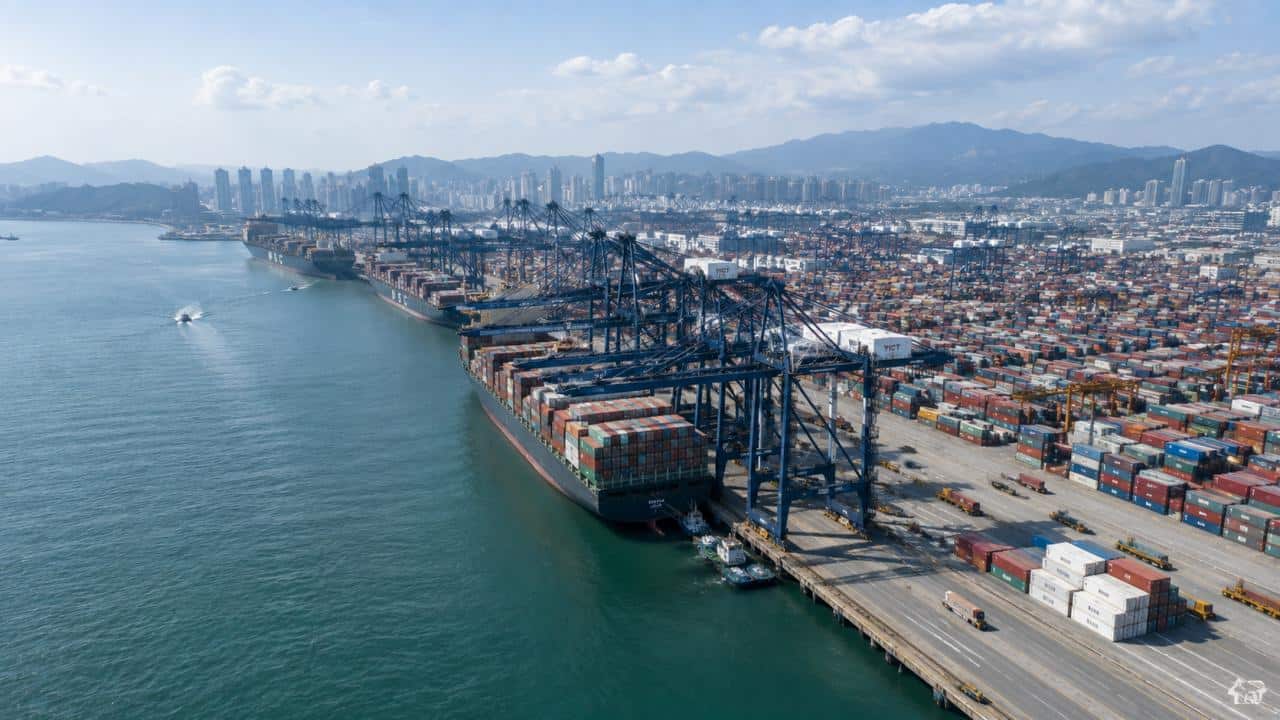
China has one of the world’s busiest and most efficient container port networks. Seven of the world’s top 10 container ports are located in China. Shanghai Port has surpassed 55 million TEUs in annual container throughput, ranking No. 1 globally for 16 consecutive years.
For importers sourcing and shipping from China, the value of China’s ports goes beyond their sheer volume. You also benefit from extensive route options, frequent sailings, and greater flexibility in shipping arrangements.
- Extensive global connectivity: China’s major ports operate more than 350 international routes, connecting with over 700 ports across more than 200 countries and regions. This gives you a wide range of route options for different overseas markets.
- Frequent sailings: Major Chinese export ports offer frequent sailings on key international routes, giving you more flexibility when planning shipments around your delivery schedule.
- Advanced infrastructure: Automated terminals, digital port systems, and streamlined customs procedures improve cargo handling and port operations, helping reduce unnecessary waiting time.
- Competitive transportation costs: China’s large cargo volumes and extensive carrier networks give you more freight options and competitive rates. However, your final cost still depends on the origin port, destination, carrier, cargo volume, and inland transportation from your factory to the port.
Choosing an export port is not simply about selecting the “largest port.” The better choice is the port offering the right balance of inland transportation costs, ocean freight, sailing schedule, and transit time.
How China Ports Support International Trade?
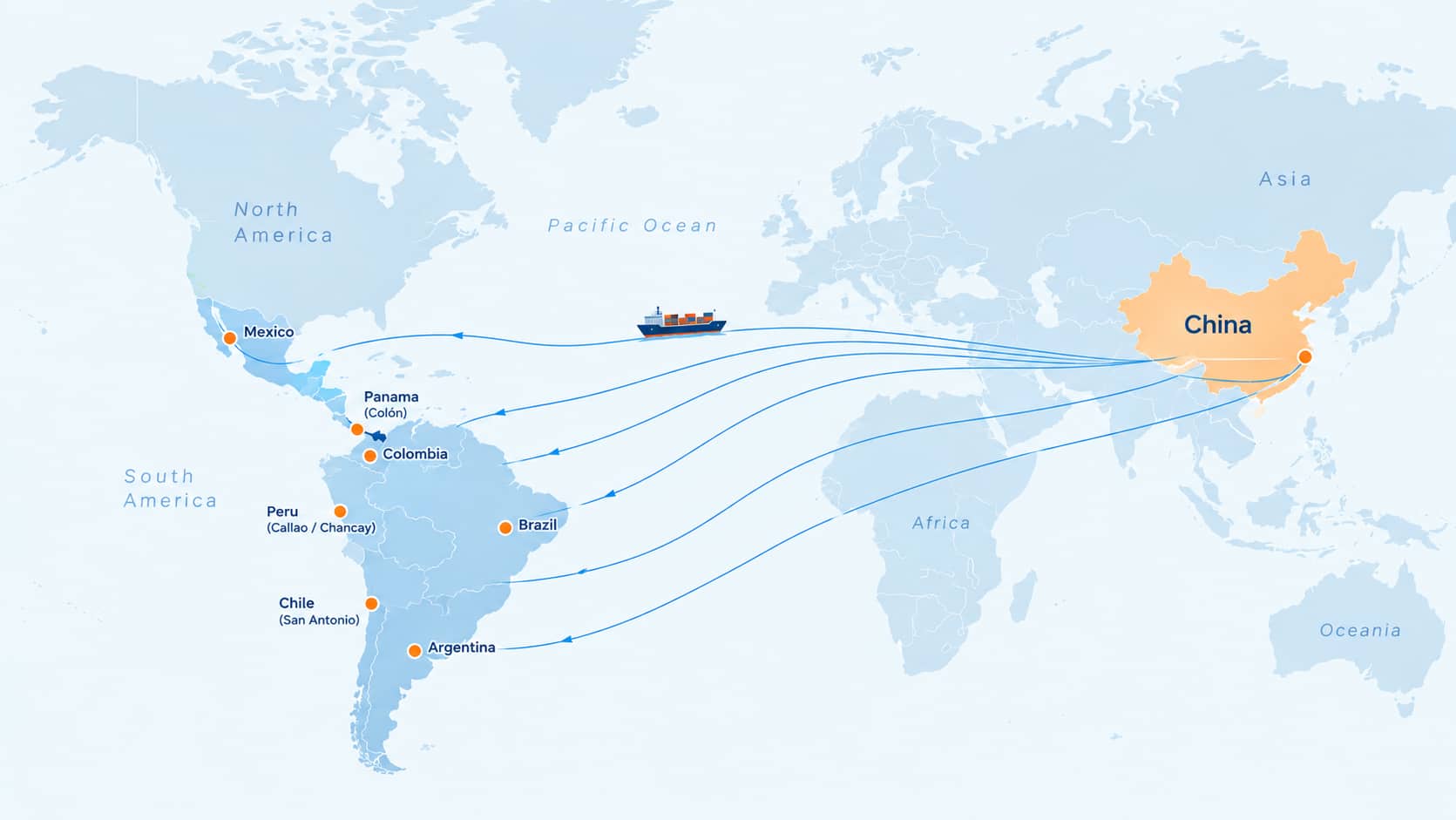
China’s ports do more than load and unload cargo. They connect factories, warehouses, trucking, customs clearance, international ocean freight, and destination delivery across the supply chain.
- Connecting different modes of transport: Ports connect highways, railways, inland waterways, and international ocean shipping. Your cargo can move from a factory or warehouse to the port by truck or rail before being loaded for export.
- Improving cargo handling and customs efficiency: Port efficiency affects not only loading and unloading but also whether your cargo can complete gate-in, customs clearance, and vessel loading as scheduled. Major Chinese ports continue to invest in digitalization and trade facilitation to improve overall operational efficiency.
- Connecting different international markets: As global trade patterns evolve, Chinese ports continue to expand and adjust their international route networks, creating more transportation options for exporters.
The right export port needs to match your supplier location, pickup arrangements, customs clearance, and international shipping plan.
Top 10 Major Ports in China for International Shipping
Manufacturing clusters in different regions of China rely on different export ports. Therefore, port size is not the only factor to consider. Your supplier location, cargo type, destination, sailing schedule, and total transportation cost matter just as much.
Shanghai Port (CNSHA)
A global container gateway and one of China’s strongest options for international shipping. Shanghai Port offers an extensive network of international services and is particularly suitable when you need frequent sailing options or connections to a wide range of overseas markets.
Key advantages:
- Extensive international services: More than 350 international routes offer a wide selection of sailing schedules.
- Strong global connectivity: Connections with more than 700 ports across over 200 countries and regions.
- Deep-water port advantage: Yangshan Deep-Water Port supports major ocean-going container services.
When should you choose Shanghai Port?
Consider Shanghai Port if your suppliers are located in Shanghai, Jiangsu, or nearby areas, or if you need more sailing options for long-haul international routes. If another port offers a significantly lower inland transportation cost from your factory, you should compare the total cost before deciding.
Ningbo-Zhoushan Port (CNNGB)
A major deep-water container port serving Zhejiang and the wider Yangtze River Delta. Ningbo is particularly competitive for manufacturers in Zhejiang because the shorter inland distance can reduce their trucking costs. Its deep-water facilities also support major international container services.
Key advantages:
- Deep-water capability: Suitable for large container vessels and international mainline services.
- Dual-hub advantage with Shanghai: Shanghai and Ningbo provide complementary routing options.
- Extensive international network: International services continue to expand, including routes such as the China-Europe Arctic Express.
When should you choose Ningbo-Zhoushan Port?
Choose Ningbo-Zhoushan as a strong option if your suppliers are in Ningbo, Yiwu, Hangzhou, Shaoxing, Taizhou, or other parts of Zhejiang. If your suppliers are in northern Jiangsu or Shanghai, compare Ningbo with Shanghai based on trucking costs and available sailings.
Shenzhen Port (CNSZX)
A major container gateway for South China and the Pearl River Delta manufacturing base. Shenzhen is especially strong in foreign-trade container shipping and cross-border e-commerce logistics, making it a practical choice when you need frequent export schedules.
Key advantages:
- Extensive foreign-trade services: Nearly 300 foreign-trade container routes.
- Strong e-commerce logistics capabilities: Mature logistics services support frequent replenishment.
- Mature Pearl River Delta supply chain: Strong connections with Shenzhen, Dongguan, Huizhou, and surrounding manufacturing centers.
- Shenzhen-Hong Kong connectivity: Provides additional routing and logistics options.
When should you choose Shenzhen Port?
Consider Shenzhen if your suppliers are in Shenzhen, Dongguan, Huizhou, or nearby Pearl River Delta manufacturing areas. It is also worth considering if you need frequent sailings or efficient export handling for e-commerce and fast-moving products.
Guangzhou Port (CNGZH)
A major South China port serving Guangzhou and the western Pearl River Delta.
Guangzhou Port can be particularly practical for manufacturers located in Guangzhou, Foshan, Zhongshan, Jiangmen, and nearby areas, where shorter inland transportation can reduce their overall logistics costs.
Key advantages:
- Strong multimodal transportation: Integrated with the Pearl River inland waterway network.
- Wide hinterland coverage: Serves major manufacturing and trading areas across the western Pearl River Delta.
- Extensive international services: More than 300 container routes, including around 186 foreign-trade routes.
When should you choose Guangzhou Port?
Consider Guangzhou Port if your suppliers are concentrated in Guangzhou, Foshan, Zhongshan, Jiangmen, or surrounding areas. If your cargo is closer to Shenzhen, compare both ports rather than choosing based on port size alone.
Qingdao Port (CNTAO)
One of North China’s leading container ports and a major gateway for Shandong’s manufacturing industries. Qingdao combines a strong industrial hinterland with an expanding international shipping network, making it an important option for northern exporters.
Key advantages:
- Strong Shandong hinterland: Convenient for suppliers in Qingdao, Yantai, Weihai, Weifang, Zibo, and surrounding areas.
- Expanding international network: New international routes continue to increase destination options.
- Strong Asian and long-haul services: Established connections with Asia and growing long-haul services.
When should you choose Qingdao Port?
Qingdao is a natural option if your suppliers are in Shandong or nearby northern provinces. It can also be worth comparing when your destination has a suitable direct or efficient service from Qingdao, especially if using another port would add significant inland transportation.
Tianjin Port (CNTSN)
A major international gateway for the Beijing-Tianjin-Hebei region and North China.
Tianjin is particularly important for industrial and project cargo, supported by its extensive hinterland and specialized logistics capabilities.
Key advantages:
- Beijing-Tianjin-Hebei hinterland: Strong connections with northern manufacturing and trading centers.
- Industrial cargo capabilities: Mature logistics support for automobiles, machinery, components, and other industrial products.
- Specialized cargo handling: Experience with specialized cargo, including dangerous goods.
- Expanding international network: New international services in 2026 continue to broaden its connectivity.
When should you choose Tianjin Port?
Consider Tianjin if your suppliers are located in Tianjin, Beijing, Hebei, or nearby northern regions. It can be particularly suitable when you are shipping machinery, automobiles, industrial equipment, or other specialized cargo.
Xiamen Port (CNXMN)
A major international container port serving Fujian and Southeast China. Xiamen is well positioned for manufacturers in Fujian and has established connections with Southeast Asia and other international markets.
Key advantages:
- Maritime Silk Road hub: 65 routes have been designated as “Maritime Silk Road” services.
- Expanding international network: New international services continue to be added.
- Strong Southeast Asian connectivity: Well-established links with major Southeast Asian markets.
When should you choose Xiamen Port?
Xiamen is usually worth considering if your suppliers are in Xiamen, Quanzhou, Fuzhou, or other parts of Fujian. If your destination is outside Xiamen’s strongest trade lanes, compare its sailing schedule and freight rate with nearby alternatives.
Hong Kong Port (HKHKG)
A major international maritime and transshipment hub connecting China with global markets. Hong Kong’s main strengths are its international connectivity, free-port environment, and mature logistics ecosystem. However, it is not automatically the most economical option for every shipment from mainland China.
Key advantages:
- Free-port advantage: Flexible international trade and transshipment operations.
- Strong transshipment capabilities: Extensive international shipping connections.
- Shenzhen-Hong Kong connectivity: Provides additional routing options.
- Mature logistics ecosystem: Strong international trade, financial, and logistics services.
When should you choose Hong Kong Port?
Consider Hong Kong when your cargo or supply chain already involves Hong Kong, when a specific carrier or service is more suitable there, or when you need its international transshipment capabilities. For shipments originating directly from mainland China, compare Hong Kong with Shenzhen and other mainland ports based on total cost.
Dalian Port (CNDLC)
A strategic container gateway for Northeast China and Northeast Asian trade. Dalian’s location makes it particularly important for exporters in the Northeast, while its proximity to Japan and South Korea supports regional trade.
Key advantages:
- Northeast China hinterland: Serves Liaoning, Jilin, Heilongjiang, and surrounding areas.
- Northeast Asian location: Convenient connections with Japan and South Korea.
- Expanding international network: New international routes continue to broaden market access.
- Regional trade connections: Strong links with Northeast and Southeast Asia.
When should you choose Dalian Port?
Dalian is the natural port to consider if your suppliers are in Liaoning, Jilin, Heilongjiang, or nearby Northeast China. For destinations outside Northeast Asia, compare the ocean service and inland transportation costs with ports such as Qingdao or Tianjin.
Beibu Gulf Port (CNNSA)
An important maritime gateway for Western China and a key hub of the New International Land-Sea Trade Corridor. Unlike the major eastern coastal ports, Beibu Gulf Port’s main advantage is its ability to connect western inland regions with international shipping routes, potentially reducing the inland transportation distance for some suppliers.
Key advantages:
- Gateway for Western China: Connects rail, road, and ocean transportation through the New International Land-Sea Trade Corridor.
- Expanding international services: Routes cover Southeast Asia, Northeast Asia, the Middle East, and South America.
- Multimodal transportation: Supports connections between the port and inland western regions.
- Regional cost advantage: Can reduce inland transportation costs for some western suppliers compared with shipping cargo to eastern coastal ports.
When should you choose Beibu Gulf Port?
Consider Beibu Gulf Port if your suppliers are in Guangxi, Yunnan, Guizhou, Sichuan, Chongqing, or other western regions and the available ocean service matches your destination. It can be particularly attractive when the inland savings outweigh any difference in ocean freight or sailing frequency compared with eastern ports.
China Export Ports by Manufacturing Region
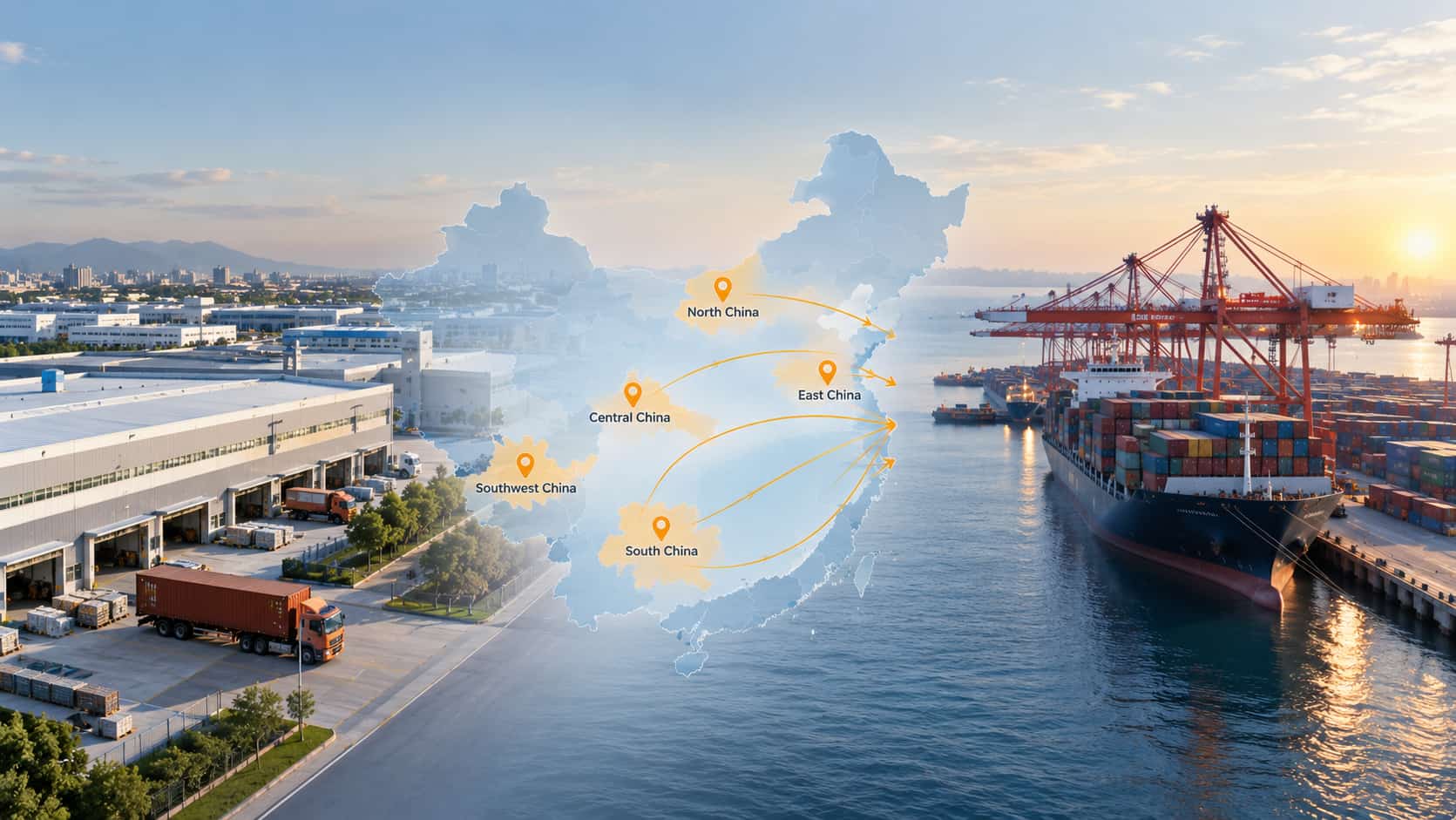
China’s manufacturing industry is highly concentrated across different regions, with ports closely connected to their respective manufacturing hinterlands.
If your supplier is located closer to a particular port, you can usually reduce trucking, rail, or other inland transportation costs. However, distance is not the only factor. You also need to consider ocean freight, sailing schedules, transit time, and destination.
| Manufacturing Region | Major Supplier Locations | Recommended Export Ports | Why Consider |
| Yangtze River Delta | Shanghai, Jiangsu, Zhejiang, Anhui | Shanghai Port / Ningbo-Zhoushan Port | Extensive international services and multiple port options for different types of ocean exports |
| Pearl River Delta | Shenzhen, Dongguan, Huizhou, Guangzhou, Foshan, Zhongshan, Jiangmen | Shenzhen Port / Guangzhou Port | Dense manufacturing clusters and mature port logistics help reduce inland transportation costs |
| Bohai Rim & North China | Shandong, Tianjin, Hebei, Liaoning | Qingdao Port / Tianjin Port / Dalian Port | Strong coverage of northern manufacturing regions, particularly suitable for machinery, automobiles, and industrial products |
| Fujian & Southeast Coast | Xiamen, Quanzhou, Fuzhou, etc. | Xiamen Port | Close to Fujian manufacturing clusters with well-developed Southeast Asian and international services |
| Northeast China | Liaoning, Jilin, Heilongjiang | Dalian Port (CNDLC) | A major Northeast China gateway, helping reduce inland transportation to ports in East or South China |
| Southwest & Western China | Guangxi, Yunnan, Guizhou, Sichuan, Chongqing | Beibu Gulf Port | The New International Land-Sea Trade Corridor provides a more direct route to international markets |
Shanghai Port vs Ningbo Port vs Shenzhen Port: Which One Is Better?
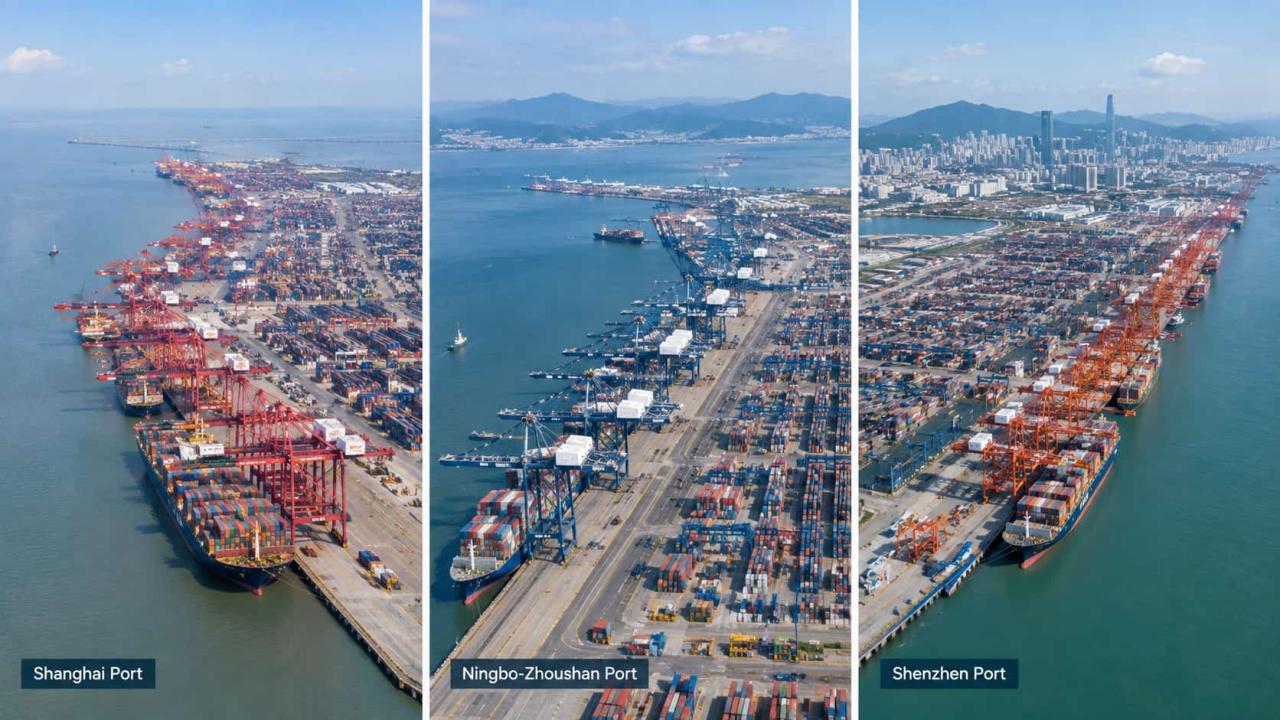
Shanghai Port, Ningbo-Zhoushan Port, and Shenzhen Port are all major international container hubs in China, but their manufacturing hinterlands, port characteristics, and shipping strengths are not identical.
There is no single best port for every shipment. For you, the more important factors are your supplier location, inland transportation costs, ocean freight, sailing schedule, and destination.
| Comparison | Shanghai Port (CNSHA) | Ningbo-Zhoushan Port (CNNGB) | Shenzhen Port (CNSZX) |
| Main service area | Shanghai, Jiangsu, Anhui, and the wider Yangtze River Delta | Zhejiang and southern Yangtze River Delta | Shenzhen, Dongguan, Huizhou, and the Pearl River Delta |
| International routes | 350+ | 300+ | Nearly 300 foreign-trade routes |
| Main advantage | Extensive global coverage and more sailing options | Deep-water port and strong international mainline capabilities | Dense South China services and mature cross-border e-commerce logistics |
| Port characteristics | Yangshan Deep-Water Port; global shipping hub | Dual-hub network with Shanghai | Yantian is a major deep-sea container terminal in South China |
| Worth considering when | You need more destination options and sailing choices | Your suppliers are in Zhejiang or you need long-haul/mainline services | Your suppliers are in the Pearl River Delta or you prioritize frequency and transit time |
| Key consideration | Sailing schedule and global connectivity | Inland transportation + ocean freight | Sailing schedule, transit time, and Pearl River Delta inland transportation |
Best China Ports for Shipping to Latin America
When shipping from China to Latin America, there is no single China port that works best for every destination. Beyond your destination port and available routes, you also need to consider supplier location, inland transportation costs, sailing schedules, direct or transshipment services, and total transit time.
The following ports are worth comparing first when shipping to major Latin American markets.
| Destination | Recommended China Ports | Why Consider Them |
| Peru | Shanghai, Ningbo-Zhoushan, Qingdao | More options for West Coast Latin America services; compare Callao and Chancay based on your supplier location and available routes |
| Chile | Shanghai, Ningbo-Zhoushan, Qingdao | Extensive long-haul options; choose based on supplier location and sailing schedule |
| Panama | Shanghai, Qingdao, Shenzhen | Compare routes to Balboa and other destination options based on sailing schedules and transshipment arrangements |
| Mexico | Shanghai, Ningbo-Zhoushan, Shenzhen | Mature Mexico services from both East and South China; compare based on supplier location |
| Colombia | Shanghai, Qingdao, Shenzhen | Compare services to Buenaventura and different direct/transshipment options |
| Brazil | Shanghai, Ningbo-Zhoushan, Shenzhen, Hong Kong | Major Chinese ports offer services to Brazil; choose based on destinations such as Santos and Rio de Janeiro |
How to Choose the Right China Export Port?
Choosing the right export port depends mainly on your supplier location, total transportation cost, sailing schedule, and transit time.
A port closer to your supplier usually means lower inland transportation costs. However, you should not choose a port based on distance or ocean freight alone. Instead, compare the total logistics cost and transit time from your factory to the final destination.
Consider Supplier Location
Your supplier’s location should be one of the first factors you consider when selecting an export port.
If your supplier is far from the port, a lower ocean freight rate may not necessarily mean a lower total shipping cost. Additional trucking and inland transportation charges can offset the savings.
| Factory Location | Priority Export Ports |
| Shanghai, Jiangsu, Anhui | Shanghai Port → Ningbo-Zhoushan Port |
| Zhejiang | Ningbo-Zhoushan Port → Shanghai Port |
| Guangdong (Shenzhen, Dongguan, Huizhou) | Shenzhen Port → Guangzhou Port |
| Guangdong (Guangzhou, Foshan, Zhongshan) | Guangzhou Port → Shenzhen Port |
| Fujian | Xiamen Port |
| Shandong | Qingdao Port |
| Beijing, Tianjin, Hebei | Tianjin Port |
| Liaoning | Dalian Port |
| Guangxi, Yunnan, Guizhou, Sichuan, Chongqing | Beibu Gulf Port |
If you purchase from multiple suppliers in different cities, consider whether consolidating the cargo at one warehouse before export would reduce your overall transportation and handling costs.
Compare Freight Cost
The ocean freight rate for the same destination can vary between Chinese ports, but the lowest ocean freight rate does not always mean the lowest total shipping cost.
When comparing ports, look at the complete cost, including:
- Factory pickup and trucking
- Export customs clearance
- Port and handling charges
- Ocean freight
- Transshipment costs
- Destination charges
- Final delivery
For example, a port with a lower ocean freight rate may require significantly higher trucking costs from your factory. In this case, another port with a slightly higher ocean freight rate could still offer a lower total cost.
Compare the complete logistics cost rather than choosing a port based on the ocean freight rate alone.
Check Sailing Schedule
If you have a specific delivery deadline, the sailing schedule can be just as important as the freight rate.
Before booking, check:
- ETD
- Sailing frequency
- Direct or transshipment service
- Carrier
- Estimated transit time
Major ports such as Shanghai, Ningbo-Zhoushan, and Shenzhen generally offer more sailing options, while the available services from other ports can vary by destination.
If you need to prepare for peak-season demand, project deadlines, or inventory replenishment, don’t choose a route only because it offers the lowest rate. A less frequent sailing schedule could leave you waiting several days for the next vessel.
Consider Transit Time
You should also compare whether the service is direct or requires transshipment.
Direct services usually involve fewer routing steps and can provide more predictable transit times. Transshipment services may offer more routing options and sometimes lower freight rates, but they can add transit time and increase the risk of delays.
| Shipping Option | Advantages | What to Consider |
| Direct vessel | Simpler routing and generally more predictable transit time | Freight rates may be higher |
| Transshipment | More routing options and potentially lower rates | Additional transit time and delay risk |
If your cargo is time-sensitive, such as seasonal products, e-commerce inventory, or project cargo, transit time and schedule reliability may be more important than saving a small amount on ocean freight.
If your cargo is less time-sensitive, a transshipment service may be worth considering when the cost savings are significant.
Frequently Asked Questions About China Ports
What Are the Main Ports in China for International Shipping?
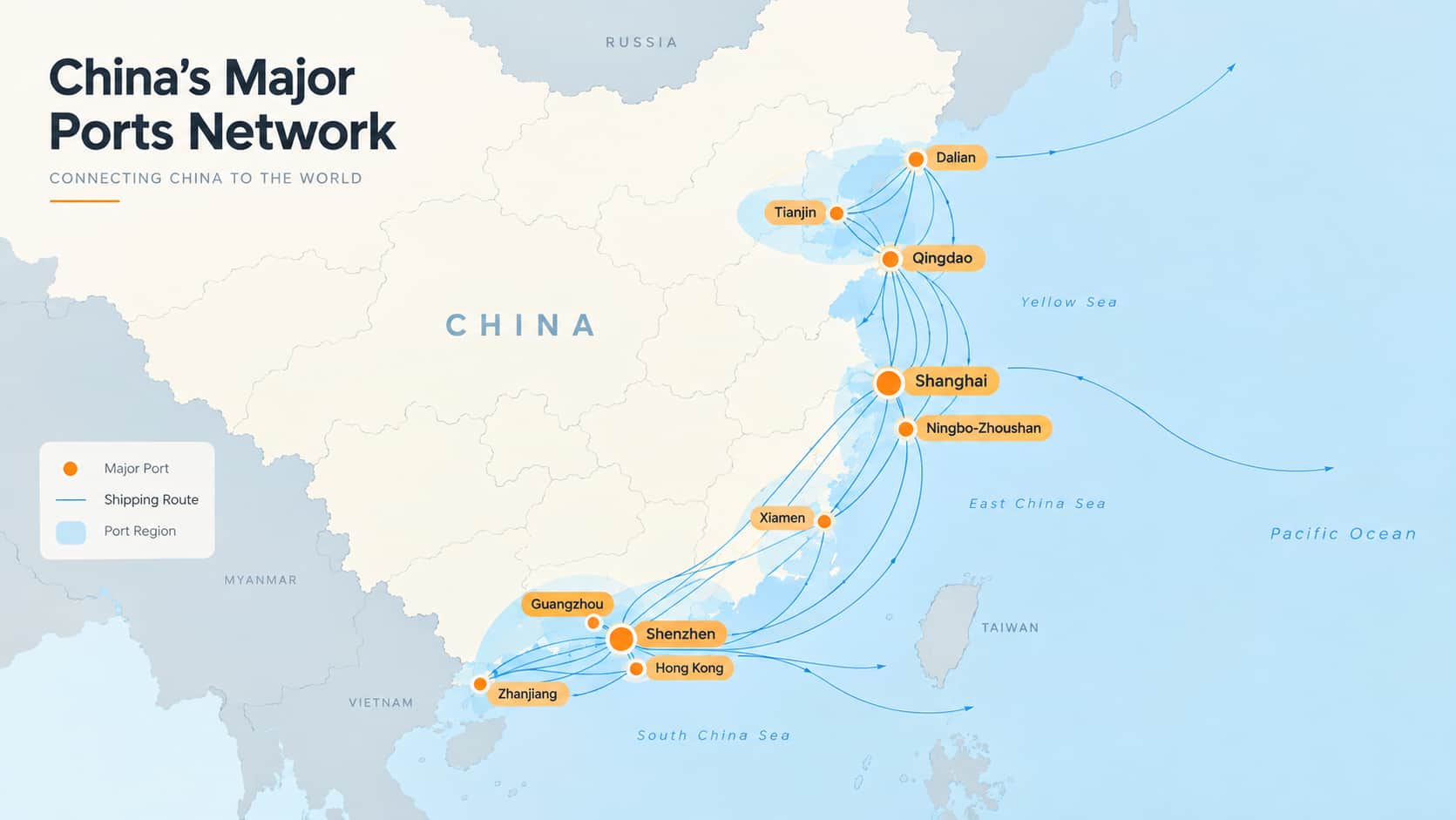
China’s major ports for international container shipping include Shanghai, Ningbo-Zhoushan, Shenzhen, Guangzhou, Qingdao, Tianjin, Xiamen, Dalian, Beibu Gulf, and Hong Kong.
The best port for your shipment depends on your supplier location, destination, sailing schedule, and total logistics cost.
What Is the Difference Between Shanghai Port and Ningbo Port?
Shanghai Port offers extensive global connectivity and a wide range of sailing options, while Ningbo-Zhoushan Port is particularly convenient for suppliers in Zhejiang and nearby areas.
If your suppliers are in Yiwu, Ningbo, Hangzhou, or Shaoxing, Ningbo is often worth considering first. For suppliers in Shanghai and Jiangsu, Shanghai may be more convenient.
What Is the Closest Port to My Factory in China?
The closest major export port depends on your supplier’s location. However, the closest port is not always the cheapest.
GWT can compare inland trucking, ocean freight, and transit time to help you find the most cost-effective option.
How Much Does It Cost to Ship From China Port to Latin America?
Shipping costs from China to Latin America depend on your origin, destination, cargo volume, container size, shipping method, and season. Your total logistics cost may also include local trucking, export customs clearance, port charges, ocean freight, and destination delivery.