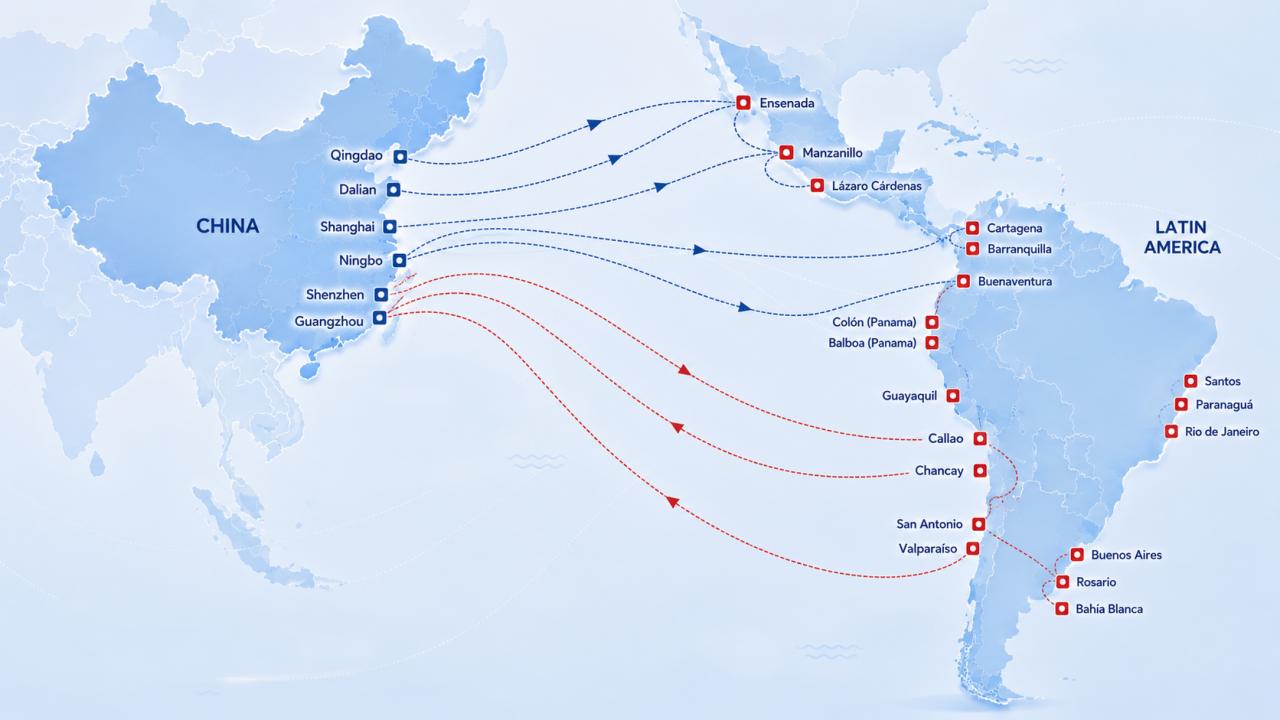
If you import goods from China to Latin America, transit time is often one of the first things to consider. This guide covers the main factors affecting transit time, including shipping methods, destination countries, routes, port schedules, transshipment, and customs clearance.
How Long Does Shipping from China to Latin America Take?
Shipping from China to Latin America can take anywhere from a few days to several weeks, depending mainly on the transportation method and destination.
For large-volume cargo without urgent delivery requirements, sea freight is generally the more economical option. For time-sensitive shipments, air freight or express services offer shorter transit times. Door-to-door shipping adds pickup, customs clearance, and final delivery to the shipping process, making the overall delivery time longer than port-to-port transit.
China to Latin America Shipping Time at a Glance
The following table gives you a quick overview of the estimated shipping time from China to Latin America by shipping method.
| Shipping Method | Estimated Transit Time | Suitable For |
| FCL Sea Freight | 25–55 days | Large-volume and containerized cargo |
| LCL Sea Freight | 30–50 days | Cargo that does not fill a container |
| Air Freight | 3–10 days | High-value or time-sensitive cargo |
| International Express | 3–7 days | Samples, documents, and small parcels |
| Sea Freight Door-to-Door | 30–55 days | FCL/LCL shipments requiring customs and delivery support |
| Air Freight Door-to-Door | 6–14 days | Time-sensitive shipments requiring final delivery |
All transit times above are estimates. Actual shipping time depends on the China origin port, destination port, shipping route, carrier schedule, transshipment, and local operating conditions.
For reference, sea freight from China to Mexico often takes around 20–32 days, while China to Brazil may take approximately 29–48 days. Shipments to Peru generally take around 26–42 days, with Chile routes often taking 32–50 days, depending on the specific route and service.
China to Latin America Transit Time by Shipping Method
The transportation method has a direct impact on transit time. Each option involves different handling, transportation, and delivery processes, so the total time varies accordingly.
Sea Freight Transit Time from China to Latin America
Sea freight from China to Latin America generally takes 25–45 days, although some longer routes may exceed 45 days.
| China Port of Departure | Destination Port | Country | Estimated Sea Transit Time |
| Shenzhen | Manzanillo | Mexico | 20–30 days |
| Shanghai | Veracruz | Mexico | 25–35 days |
| Shanghai | Santos | Brazil | 35–45 days |
| Shenzhen | Paranaguá | Brazil | 35–48 days |
| Shanghai | Callao | Peru | 28–38 days |
| Shanghai | Chancay | Peru | 23–30 days |
| Shanghai | San Antonio | Chile | 32–42 days |
| Ningbo | Valparaíso | Chile | 32–42 days |
| Shenzhen | Cartagena | Colombia | 30–40 days |
| Shanghai | Buenaventura | Colombia | 28–38 days |
| Shanghai | Buenos Aires | Argentina | 42–52 days |
| Shenzhen | Balboa | Panama | 25–35 days |
| Shanghai | Colón | Panama | 25–35 days |
| Shanghai | Guayaquil | Ecuador | 28–40 days |
FCL Transit Time
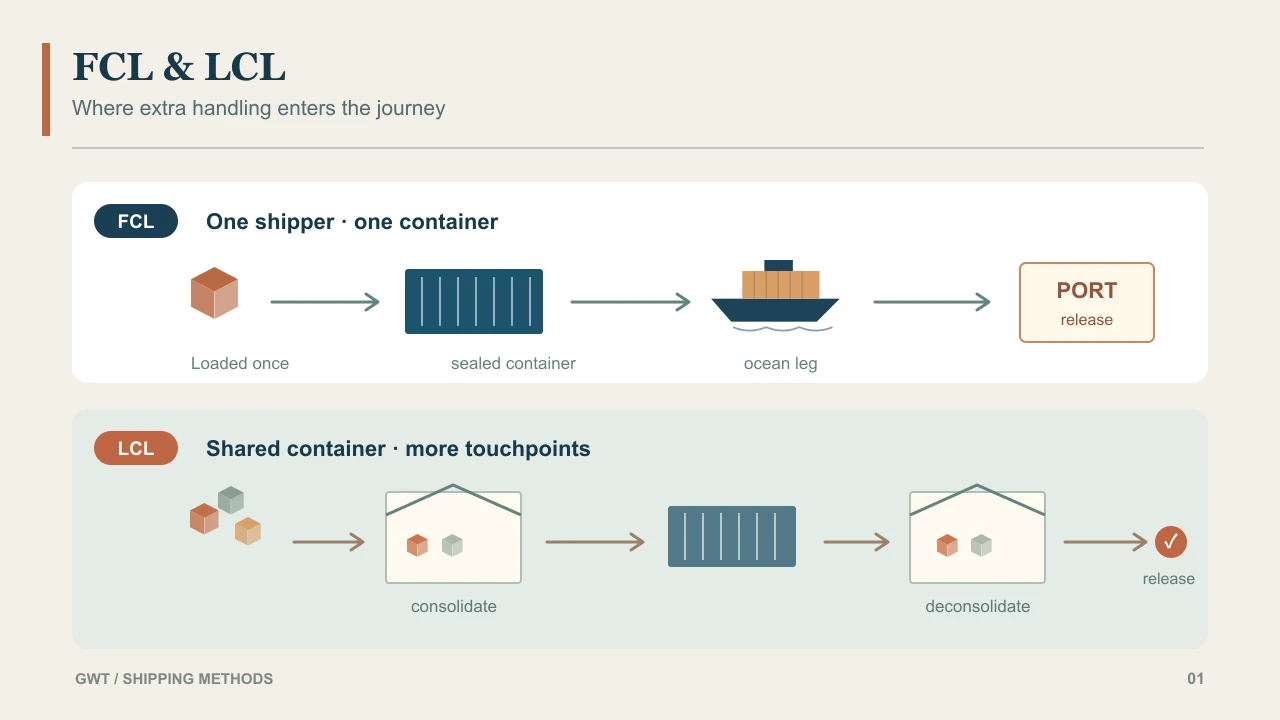
FCL(Full Container Load) means your cargo occupies an entire shipping container. Compared with LCL, the process involves fewer consolidation and deconsolidation steps, which generally makes the transit process more predictable.
A direct sailing can further reduce waiting time, especially when the vessel schedule matches your cargo readiness date.
LCL Transit Time
LCL(Less than Container Load), means your cargo shares a container with goods from other shippers. The additional consolidation and deconsolidation steps usually make LCL 5–10 days slower than FCL.
For cargo collected from multiple suppliers, you also need to allow time for warehouse consolidation and for all shipments to arrive before the container is ready for departure.
Air Freight Transit Time from China to Latin America
For shipments moving by air freight, the estimated airport-to-airport transit time from China to major Latin American destinations is generally 3–10 days.
| China Airport | Destination Airport | Estimated Air Transit Time |
| Shenzhen Bao’an International Airport (SZX) | Mexico City International Airport (MEX) | 3–5 days |
| Shenzhen Bao’an International Airport (SZX) | São Paulo/Guarulhos International Airport (GRU) | 4–8 days |
| Guangzhou Baiyun International Airport (CAN) | Jorge Chávez International Airport (LIM) | 4–5 days |
| Guangzhou Baiyun International Airport (CAN) | El Dorado International Airport (BOG) | 4–6 days |
| Shanghai Pudong International Airport (PVG) | Arturo Merino Benítez International Airport (SCL) | 4–6 days |
| Shanghai Pudong International Airport (PVG) | Ministro Pistarini International Airport (EZE) | 5–7 days |
| Shenzhen Bao’an International Airport (SZX) | Tocumen International Airport (PTY) | 4–7 days |
| Guangzhou Baiyun International Airport (CAN) | La Aurora International Airport (GUA) | 4–7 days |
Keep in mind that airport-to-airport transit time does not include pickup, customs clearance, or final delivery.
Express Shipping Transit Time from China to Latin America
For small shipments where delivery speed is a priority, express shipping offers a faster option. From China to major cities in Latin America, estimated express transit time is generally around 3–10 days.
| Destination | Estimated Express Transit Time |
| Mexico | 3–7 business days |
| Brazil | 3–7 business days |
| Peru | 3–7 business days |
| Chile | 4–8 business days |
| Colombia | 5–10 business days |
| Argentina | 3–8 business days |
| Panama | 4–8 business days |
| Ecuador | 4–8 business days |
Door-to-Door Shipping Transit Time from China to Latin America
Door-to-door shipping covers more than the international transportation itself. After pickup from your supplier, the cargo still needs to go through export procedures, international transportation, destination customs clearance, and final delivery to your warehouse or other address.
| Destination | Estimated Sea Freight Door-to-Door | Estimated Air Freight Door-to-Door |
| Mexico | 25–35 days | 6–12 days |
| Brazil | 40–50 days | 7–14 days |
| Peru | 30–42 days | 6–12 days |
| Chile | 35–48 days | 6–12 days |
| Colombia | 32–45 days | 6–12 days |
| Argentina | 45–55 days | 7–14 days |
| Panama | 30–40 days | 6–12 days |
| Ecuador | 32–45 days | 6–12 days |
China to Latin America Transit Time by Country
The destination country, port, shipping route, and service type all affect transit time. Even within the same country, different ports can produce noticeably different shipping schedules.
The following country-by-country estimates give you a more practical reference when planning a shipment.
China to Mexico Transit Time
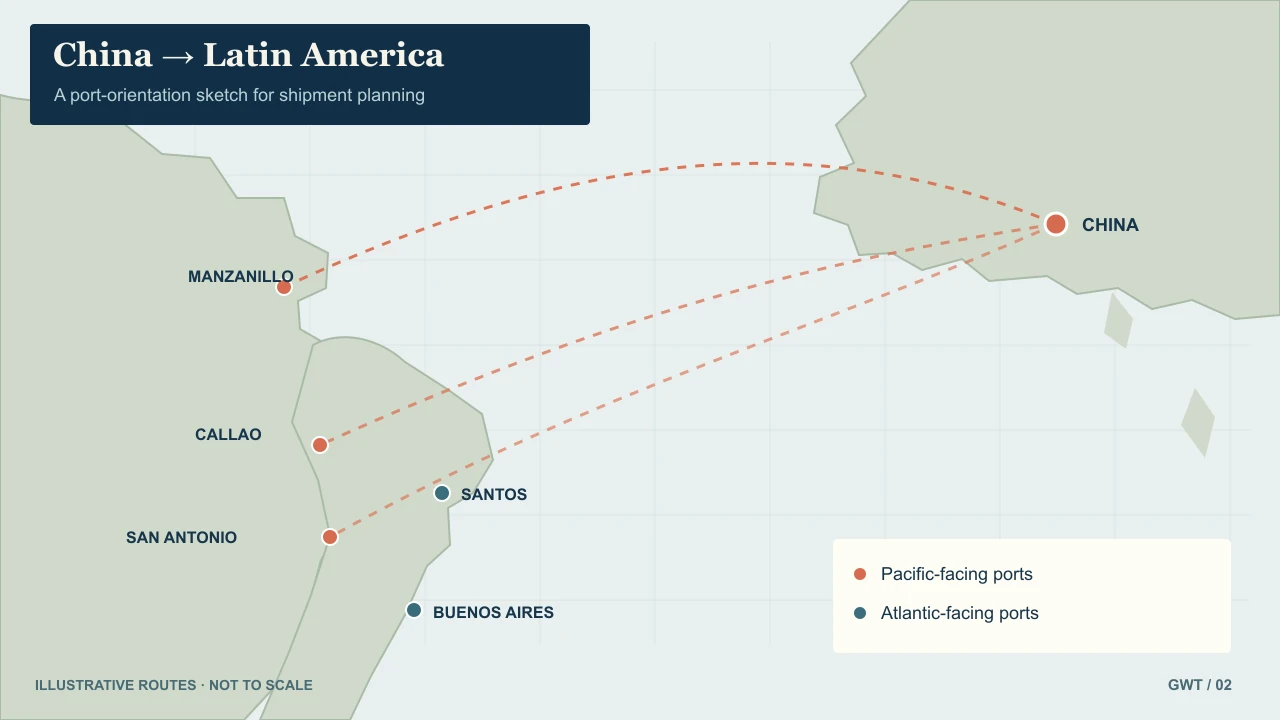
For FCL shipments on China to Mexico routes, transit time depends largely on the origin port and whether the cargo moves through a direct or transshipment service. Manzanillo and Ensenada are important destinations for cargo entering Mexico from the Pacific, while Veracruz serves the Gulf side.
| Shipping Method | Route | Estimated Transit Time |
| FCL Sea Freight | Tianjin → Manzanillo | 18–25 days |
| FCL Sea Freight | Qingdao → Ensenada | 16–25 days |
| FCL Sea Freight | Qingdao → Manzanillo | 20–28 days |
| FCL Sea Freight | Shenzhen → Manzanillo | 22–30 days |
| LCL Sea Freight | China → Mexico | 25–50 days |
| Air Freight | China → Mexico City | 3–10 days |
China to Brazil Transit Time
China–Brazil is one of the longer major Latin American shipping routes. Santos is the main destination for many container shipments, while Paranaguá and Rio de Janeiro are also used depending on the final destination and available services.
| Shipping Method | Route | Estimated Transit Time |
| FCL Sea Freight | Shanghai → Santos | 30–38 days |
| FCL Sea Freight | Shenzhen → Santos | 32–42 days |
| FCL Sea Freight | Ningbo → Paranaguá | 32–42 days |
| FCL Sea Freight | Shanghai → Rio de Janeiro | 35–45 days |
| LCL Sea Freight | China → Brazil | 35–50 days |
| Air Freight | Shanghai → São Paulo | 4–8 days |
China to Peru Transit Time
For shipments from China to Peru, Callao and Chancay are the two ports to consider. The choice of origin port, destination port, and direct or transshipment service can all affect the final transit time.
| Shipping Method | Route | Estimated Transit Time |
| FCL Sea Freight | Shanghai → Chancay | 23–30 days |
| FCL Sea Freight | Shenzhen → Callao | 30–38 days |
| FCL Sea Freight | Shanghai → Callao | 28–38 days |
| LCL Sea Freight | China → Peru | 35–45 days |
| Air Freight | China → Lima | 4–8 days |
China to Chile Transit Time
China to Chile shipments generally move through Chile’s Pacific ports, with San Antonio and Valparaíso being the main destinations for container cargo. The origin port and sailing arrangement can result in different transit times.
| Shipping Method | Route | Estimated Transit Time |
| FCL Sea Freight | Shanghai → San Antonio | 32–40 days |
| FCL Sea Freight | Shanghai → Valparaíso | 32–42 days |
| FCL Sea Freight | Shenzhen → San Antonio | 35–45 days |
| FCL Sea Freight | Ningbo → Valparaíso | 35–45 days |
| LCL Sea Freight | China → Chile | 38–50 days |
| Air Freight | Shanghai → Santiago | 4–8 days |
China to Colombia Transit Time
China–Colombia shipments mainly use Buenaventura on the Pacific coast or Cartagena on the Caribbean coast. The choice between these ports can affect the route and overall transit time.
| Shipping Method | Route | Estimated Transit Time |
| FCL Sea Freight | Shanghai → Buenaventura | 25–35 days |
| FCL Sea Freight | Shenzhen → Buenaventura | 28–38 days |
| FCL Sea Freight | Shanghai → Cartagena | 30–40 days |
| FCL Sea Freight | Shenzhen → Cartagena | 30–42 days |
| LCL Sea Freight | China → Colombia | 35–45 days |
| Air Freight | Shanghai → Bogotá | 4–8 days |
China to Argentina Transit Time
China to Argentina is another relatively long shipping route. Buenos Aires is the main destination for containerized cargo, while other destinations may require additional inland or regional transportation.
| Shipping Method | Route | Estimated Transit Time |
| FCL Sea Freight | Shanghai → Buenos Aires | 35–45 days |
| FCL Sea Freight | Shenzhen → Buenos Aires | 38–48 days |
| FCL Sea Freight | Ningbo → Buenos Aires | 38–50 days |
| FCL Sea Freight | Shanghai → Rosario | 40–50 days |
| LCL Sea Freight | China → Argentina | 40–55 days |
| Air Freight | Shanghai → Buenos Aires | 5–10 days |
China to Panama Transit Time
Panama’s location between the Pacific and Atlantic makes it an important logistics hub. When shipping from China to Panama, Balboa and Colón are the main ports to consider, depending on the shipping route and final destination.
| Shipping Method | Route | Estimated Transit Time |
| FCL Sea Freight | Shenzhen → Balboa | 25–35 days |
| FCL Sea Freight | Shanghai → Balboa | 28–36 days |
| FCL Sea Freight | Shenzhen → Colón | 28–38 days |
| FCL Sea Freight | Shanghai → Colón | 30–40 days |
| LCL Sea Freight | China → Panama | 30–45 days |
| Air Freight | Shanghai → Panama City | 4–8 days |
China to Ecuador Transit Time
Guayaquil is the main destination for container shipments from China to Ecuador. Some services involve transshipment through regional hubs, so the actual transit time can vary between carriers and sailing schedules.
| Shipping Method | Route | Estimated Transit Time |
| FCL Sea Freight | Shanghai → Guayaquil | 30–38 days |
| FCL Sea Freight | Shenzhen → Guayaquil | 28–39 days |
| FCL Sea Freight | Ningbo → Guayaquil | 30–40 days |
| FCL Sea Freight | Qingdao → Guayaquil | 32–42 days |
| LCL Sea Freight | China → Ecuador | 35–45 days |
| Air Freight | Guangzhou → Quito | 3–7 days |
Port-to-Port vs Door-to-Door Transit Time
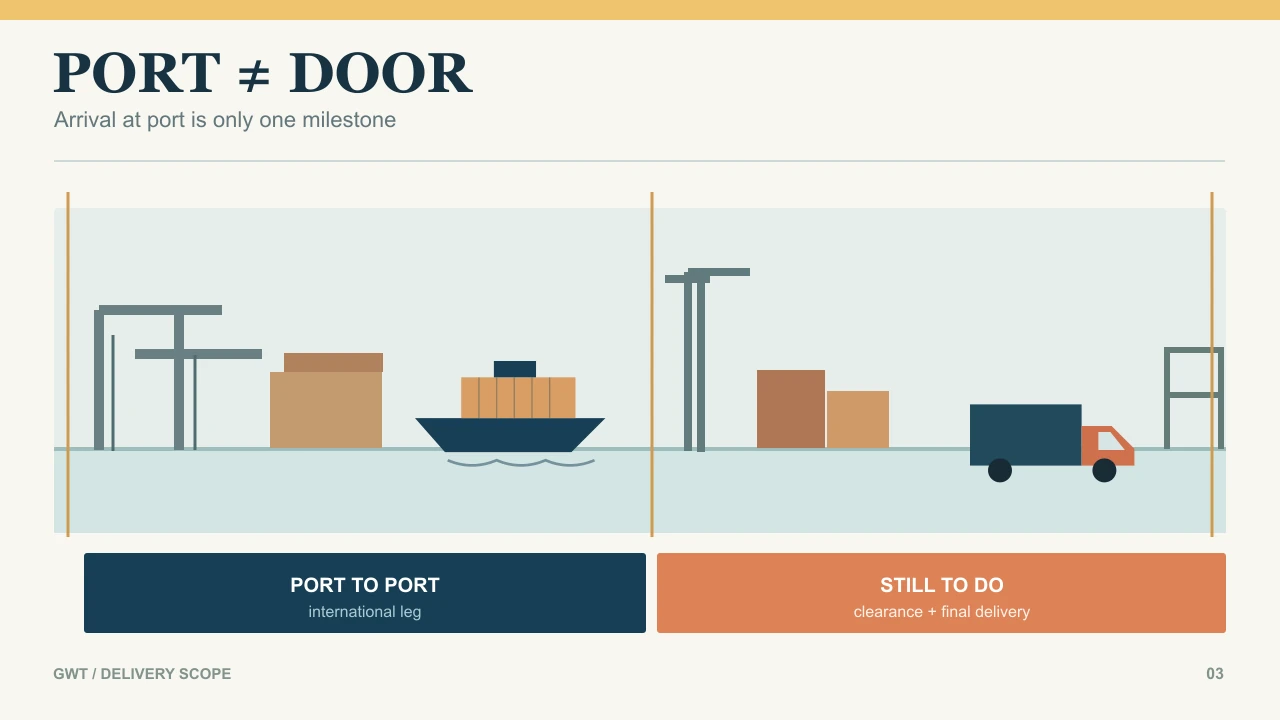
“Your cargo has arrived at the port” does not necessarily mean it has reached your warehouse. Customs clearance and final delivery still need to be completed.
Understanding the difference between port-to-port and door-to-door transit time helps you estimate the actual time from shipment departure to final delivery.
Why Does Door-to-Door Take Longer?
The additional time mainly comes from several stages outside the ocean or air journey:
- Pickup and export customs clearance (1–3 days): Cargo moves from your supplier to the port and goes through export procedures.
- Destination customs clearance (3–10 business days): Clearance time varies significantly between Latin American countries and depends on the shipment and documentation.
- Duty payment and customs inspection (1–5 days): Additional time may be required if the shipment is selected for inspection or further document review.
- Final-mile delivery (1–5 days): Cargo moves from the destination port to your warehouse, store, or other final address.
What Factors Affect Transit Time from China to Latin America?
Ocean sailing time is only one part of the overall transportation process. The selected route, port conditions, customs clearance, documentation, weather, and unexpected operational issues can all affect the actual transit time.
Understanding these factors makes it easier to plan your shipment and allow enough time for potential delays.
Shipping Route, Transshipment and Ports
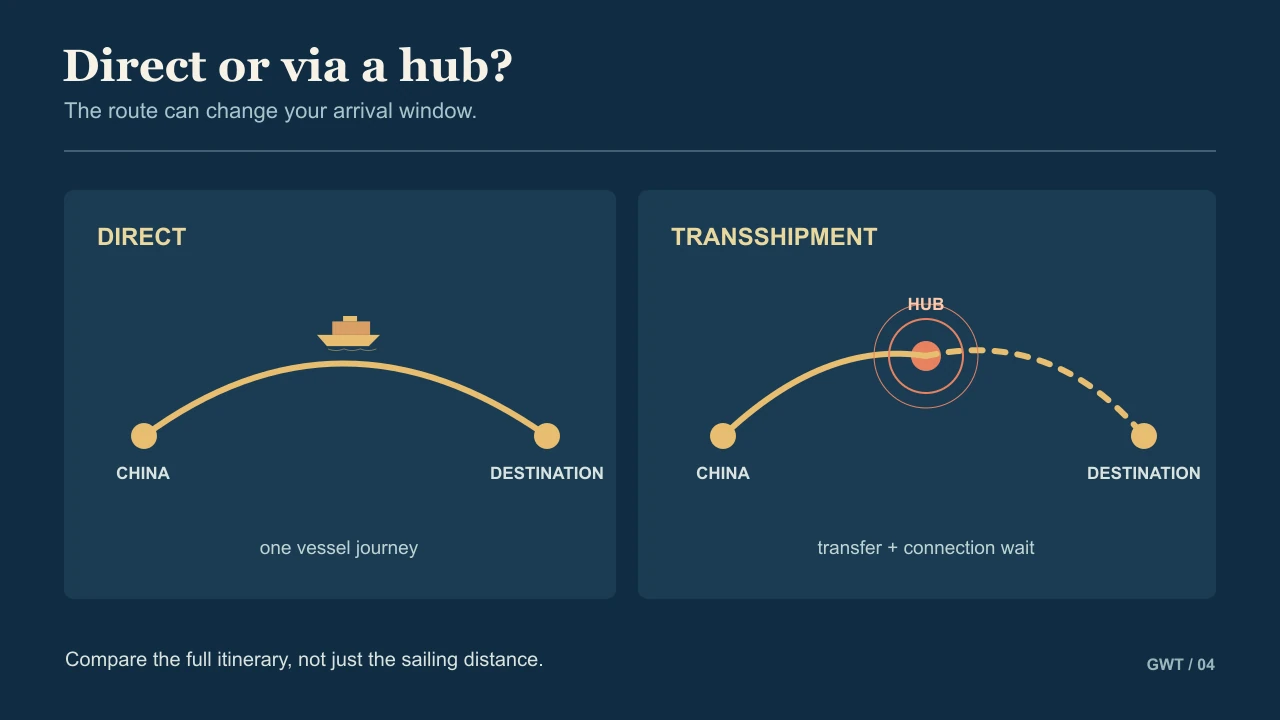
The shipping route has a direct impact on transit time. The shipping route has a direct impact on transit time. A port closer to your supplier is not always the fastest option if its available sailing requires a longer transshipment route.
With a direct sailing, your cargo does not need to change vessels at an intermediate port, which generally reduces waiting time. A transshipment service may require your cargo to wait for the next available vessel, adding several days to the overall schedule.
Port Congestion and Peak Season
Port congestion can become a major source of delay on busy Latin American routes.
Santos, Buenos Aires, and Buenaventura may experience periods of congestion that affect vessel operations, container availability, or cargo pickup.
Peak shipping periods can create additional pressure on vessel capacity and port operations. The months leading up to major retail seasons and the period before Chinese New Year often see increased cargo volumes.
If your shipment has a strict delivery deadline, earlier booking and additional buffer time are worth considering during busy periods.
Customs Clearance and Documentation
Customs clearance times vary significantly across Latin America.
| Country / Region | Typical Clearance Considerations | Estimated Clearance Time |
| Mexico | Customs procedures and document requirements vary by shipment | 3–5 days |
| Brazil | More detailed procedures and stricter documentation requirements | 7–10 business days |
| Latin America overall | Varies significantly by country and shipment | 5–10 business days |
The condition and accuracy of your commercial invoice, packing list, HS code, declared value, and other required documents can have a direct impact on clearance time.
Weather and Other Unexpected Delays
Weather conditions, vessel schedule changes, cancelled sailings, port operational issues, and other unexpected events can all affect actual transit time.
These factors cannot always be predicted in advance. For this reason, transit time should be treated as an estimated range rather than a guaranteed delivery date.
For urgent replenishment or products with a short selling cycle, allowing some additional buffer time is a practical way to reduce the risk of missed delivery deadlines.
How to Reduce Shipping Transit Time from China to Latin America
Although some delays are outside your control, early planning can reduce waiting time at several stages of the shipment.
Choose the Right Port and Shipping Route
A few practical considerations can make a difference:
- Prioritize direct sailing services when the schedule and cost are suitable.
- Compare departure ports based on your supplier location and available sailing schedules.
- Check newly launched or upgraded services that may offer shorter transit times.
- Compare the full route rather than looking only at the ocean sailing time.
Prepare Shipping and Customs Documents in Advance
Having the required documents ready before departure can reduce unnecessary customs delays.
Common documents include:
- Commercial Invoice
- Packing List
- Bill of Lading
- Certificate of Origin, where required
- Fumigation Certificate for applicable wood packaging
- Other documents required by the destination country or product category
The exact requirements depend on the destination country and type of cargo.
Work with a Freight Forwarder with Local Customs Support
A freight forwarder familiar with Latin American routes can help you:
- Compare faster and more reliable shipping routes
- Secure space earlier during peak periods
- Prepare shipping and customs documents correctly
- Monitor schedule changes and port conditions
- Handle unexpected issues such as congestion or vessel delays
How to Calculate Total Shipping Time from China to Latin America
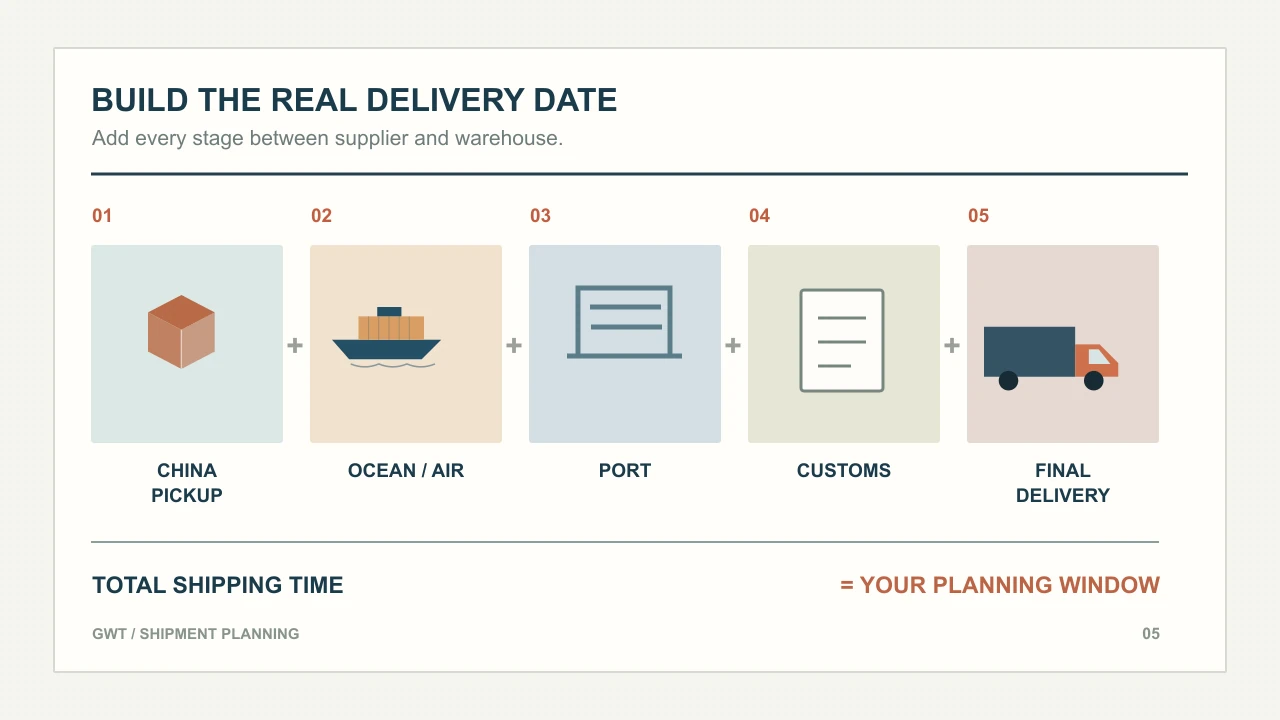
To estimate the total time from shipment pickup to final delivery, each stage needs to be included rather than looking only at the ocean or air transit time.
Total Shipping Time = China-side Handling + International Transit + Destination Port Handling + Customs Clearance + Final Delivery
| Shipping Stage | Estimated Time | What It Includes |
| China pickup + export customs | 1–3 days | Pickup from the supplier and export procedures |
| Transit time | 20–50 days by sea /3-6 days by air | Sailing time based on destination and route |
| Destination port handling | 1–3 days | Unloading and terminal operations |
| Import customs clearance | 3–10 business days | Customs declaration, review, and clearance |
| Final delivery | 1–5 days | Transportation from the port to the final address |
Frequently Asked Questions About China to Latin America Transit Time
Why Can Actual Transit Time Be Longer Than the Estimated Time?
Actual transit time may exceed the original estimate because of factors outside your direct control, including:
- Port congestion: Busy periods can slow vessel operations and container pickup.
- Weather: Severe weather can affect vessel schedules and port operations.
- Customs inspection: Additional inspection or document review can delay cargo release.
- Vessel schedule changes: Carriers may adjust or cancel sailings.
- Transshipment delays: A missed connection at a transit port can add several days.
For shipments with a fixed delivery deadline, allowing an additional 7–14 days of buffer can provide more flexibility.
Why Does LCL Usually Take Longer Than FCL?
LCL usually takes longer because of the additional consolidation and deconsolidation steps.
At the origin, your cargo needs to be consolidated with other shipments before the container can depart. At the destination, the container may need to move to a CFS or warehouse for deconsolidation before your cargo is released for customs clearance.
These additional steps can add around 5–10 days compared with FCL, although the actual difference depends on the route and shipment.
Does Customs Clearance Affect Transit Time?
Yes. Customs clearance can have a significant impact on the overall delivery time.
Typical estimates include:
- Mexico: around 3–5 days
- Brazil: around 7–10 business days
- Latin America overall: around 5–10 business days
The actual time depends on the completeness and accuracy of your documents, the type of cargo, customs procedures, and whether the shipment requires inspection or additional review.
Is Transit Time the Same as Door-to-Door Delivery Time?
No.
Transit time usually refers to the transportation period between the origin and destination points, such as port-to-port or airport-to-airport.
Door-to-door delivery time covers the wider process, from pickup at your supplier’s location to delivery at your final address. It may include domestic transportation, export procedures, international transportation, customs clearance, and final-mile delivery.
How Can I Get an Accurate Transit Time for My Shipment?
The most accurate estimate comes from checking your actual route, cargo details, and current sailing or flight schedule.
Before booking, it helps to:
- Check the current sailing or flight schedule for your preferred route.
- Provide complete cargo details, including product type, quantity, weight, volume, origin, and destination.
- Confirm the transportation method, such as FCL or LCL and direct or transshipment service.
- Clarify the service scope, including port-to-port or door-to-door delivery.
- Allow a reasonable buffer for customs clearance, port operations, and unexpected delays.
With these details, your estimated transit time will be much more useful for inventory planning and delivery scheduling.